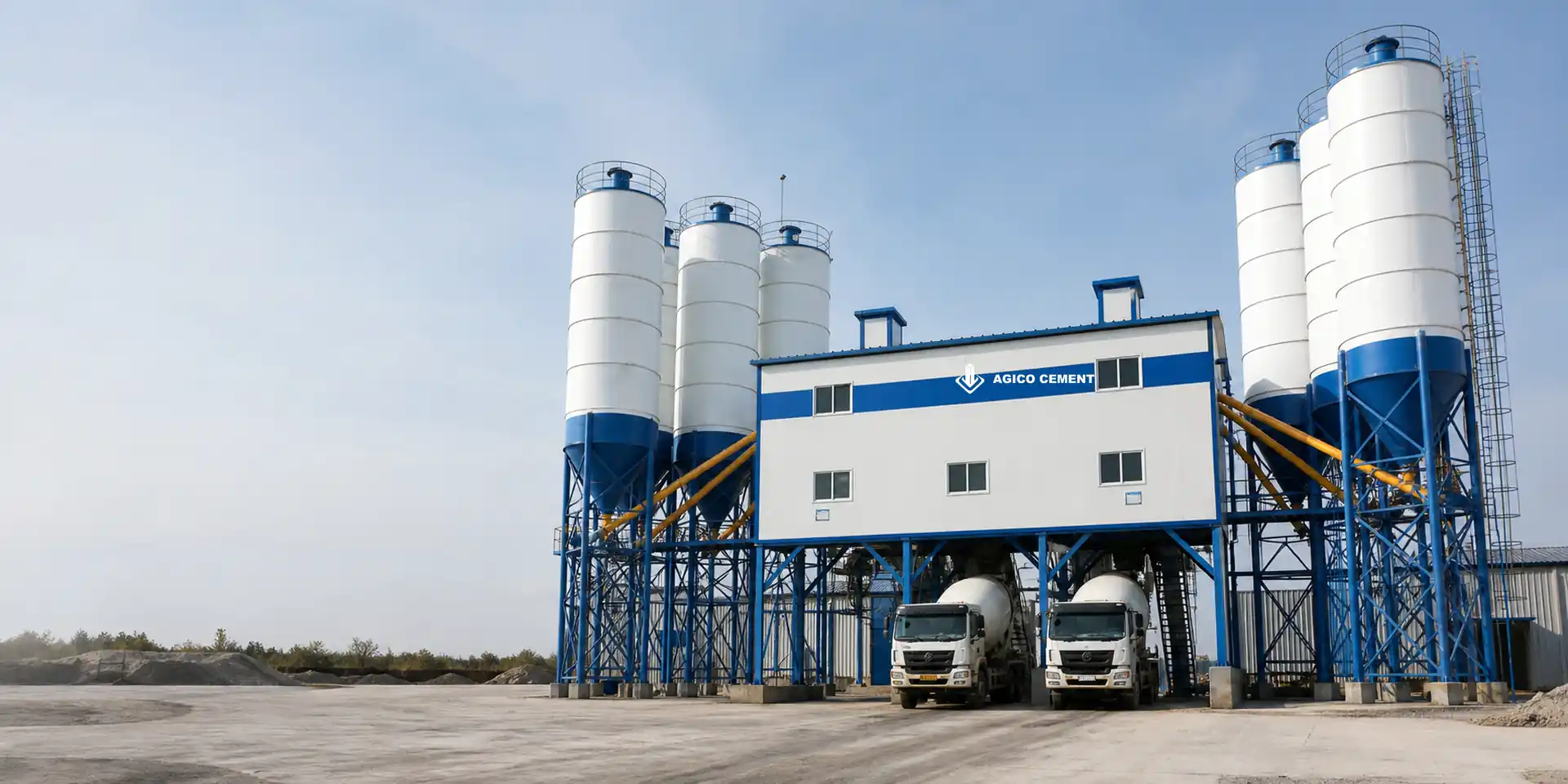
CENTRAL MIX SYSTEMS FOR COMMERCIAL CONCRETE SUPPLY
Central Mix Concrete Plant for Commercial Ready-Mix Production
Plan commercial ready-mix production around market demand, concrete recipes, truck dispatch, storage autonomy, and the required plant-side mixing system.
Engineered and supplied as a complete production system for commercial concrete production.
ENGINEERING, MANUFACTURING & DELIVERY
AGICO Complete Central Mix Plant Supply Capability
Move from initial demand data to a commissioned production base through one coordinated scope of engineering, equipment supply and lifecycle support.
Demand & Material Analysis
Buyer input: target output, aggregates, mix portfolio and operating schedule.
AGICO output: a documented design basis for capacity, mixer and storage selection.
Process and Layout Engineering
Buyer input: site boundary, utilities, truck routes and civil constraints.
AGICO output: coordinated process flow, equipment arrangement and interface requirements.
Equipment Manufacturing
Buyer input: approved technical scope and production schedule.
AGICO output: fabricated, machined and assembled plant systems matched to the approved configuration.
Factory Inspection
Buyer input: agreed inspection points and acceptance documents.
AGICO output: equipment checks, records and packing release before shipment.
Packing and International Delivery
Buyer input: destination, port conditions and delivery priorities.
AGICO output: shipment planning, identifiable packages and coordinated export documentation.
Installation and Commissioning
Buyer input: site readiness, local labor, lifting access and utilities.
AGICO output: installation guidance, system checks and production-start support.
Training and Lifecycle Support
Buyer input: operator roles, maintenance plan and spare-parts strategy.
AGICO output: practical training, service coordination and lifecycle parts support.
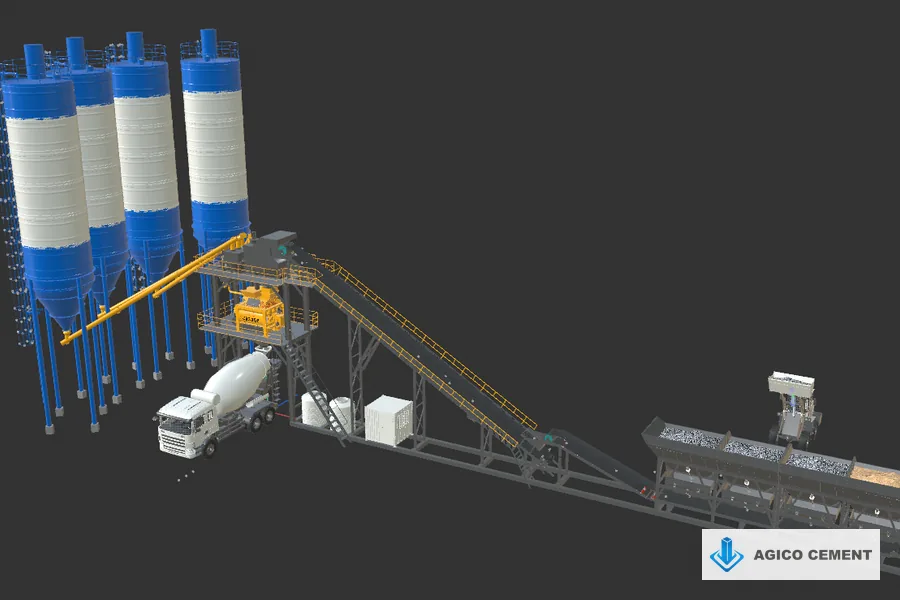
Engineering Layout
A coordinated basis for equipment arrangement, material flow and site interfaces.
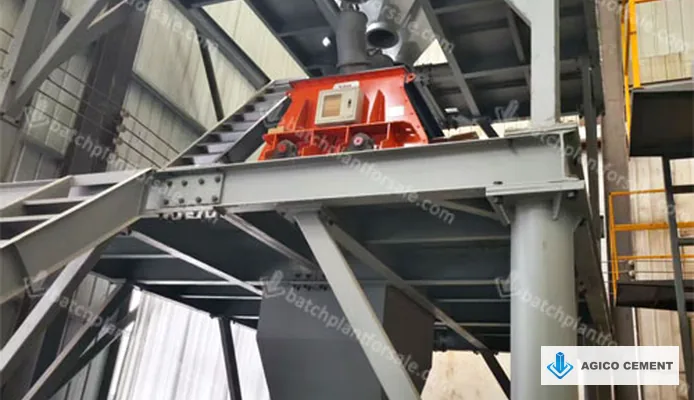
Manufacturing Evidence
Batching and mixer-support structures assembled around the approved plant configuration.
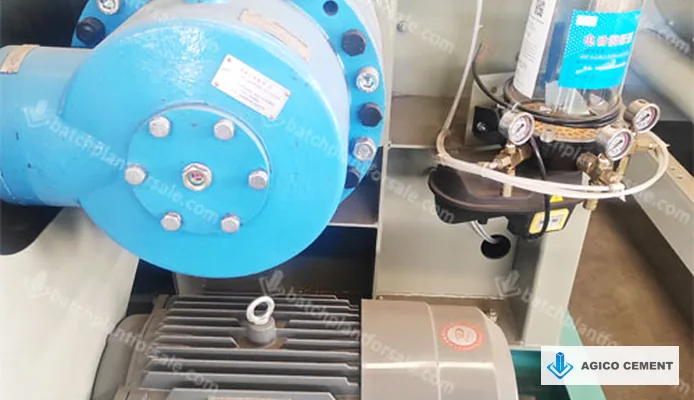
Equipment Inspection
Drive and lubrication assemblies checked as identifiable parts of the production system.
Turn project inputs into an engineering proposal
Share capacity, materials, site conditions and delivery priorities for a project-specific scope.
PRODUCTION METHOD COMPARISON
Central Mix vs Transit Mix vs Shrink Mix
Compare where mixing happens, how trucks are used, what quality records are available, and which operating model each method supports.
CONTROLLED PRODUCTION WORKFLOW
How Central Mixing Builds Concrete Consistency
Select each stage to review its role in batch consistency.
Stage 1: Aggregate Proportioning
Each aggregate fraction is metered to the approved recipe before transfer.
Stage 2: Powder & Liquid Weighing
Cement, water and admixtures are weighed through independent controlled circuits.
Stage 3: Forced Central Mixing
The plant mixer completes the designed mixing sequence before truck loading.
Stage 4: Quality Verification
Batch weights, timing, alarms and operator actions are recorded for review.
Stage 5: Controlled Discharge
Finished concrete is discharged to the delivery vehicle around dispatch demand.
CENTRAL MIX CONFIGURATION
Configure the Mixing Core and Production Line
Select mixer geometry and line architecture from concrete demand, dispatch peaks, maintenance access and resilience requirements.
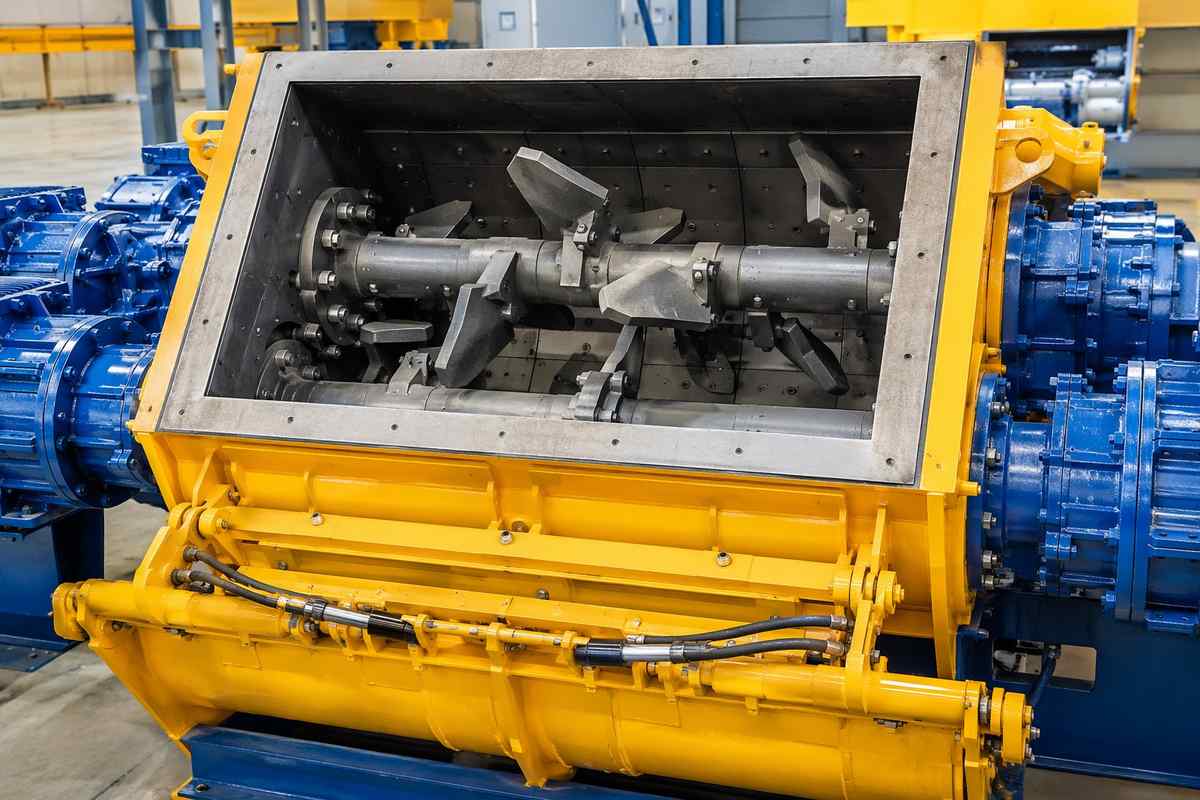
Twin-shaft Mixer
Consider for robust forced mixing, commercial production rhythm and broad recipe coverage.
Planetary Mixer
Consider where compact mixing action and demanding material distribution are important.
Selection Inputs
Aggregate size, concrete class, batch volume, cycle requirement and wear strategy.
Maintenance Inputs
Access, liner replacement, shaft-end care, cleaning and spare-parts planning.
Need to validate mixer type or line redundancy?
REVIEW MY PRODUCTION PLANCAPACITY & DISPATCH DECISION
Commercial Output and Dispatch Planner
Compare four practical production bands against market profile, truck release pattern, mixer-line architecture, material autonomy, and resilience needs.
COMMERCIAL OUTPUT PLANNER
60–90 m³/h Central Mix Plant Planning Band
Use this band as an engineering starting point. Usable output depends on the recipe, cycle, material replenishment, truck exchange, and operating plan.
Market Profile
Regional supplier serving controlled local delivery zones and a focused customer base.
Dispatch Pattern
Single-line production organized around regular daily truck cycles and measured peak periods.
Mixer & Line Architecture
Evaluate a twin-shaft single-line starting architecture against recipe and batch-size needs.
Storage Strategy
Size material autonomy around dependable replenishment for the planned operating shift.
Resilience Requirement
Reserve physical interfaces for later storage additions or a future production upgrade.
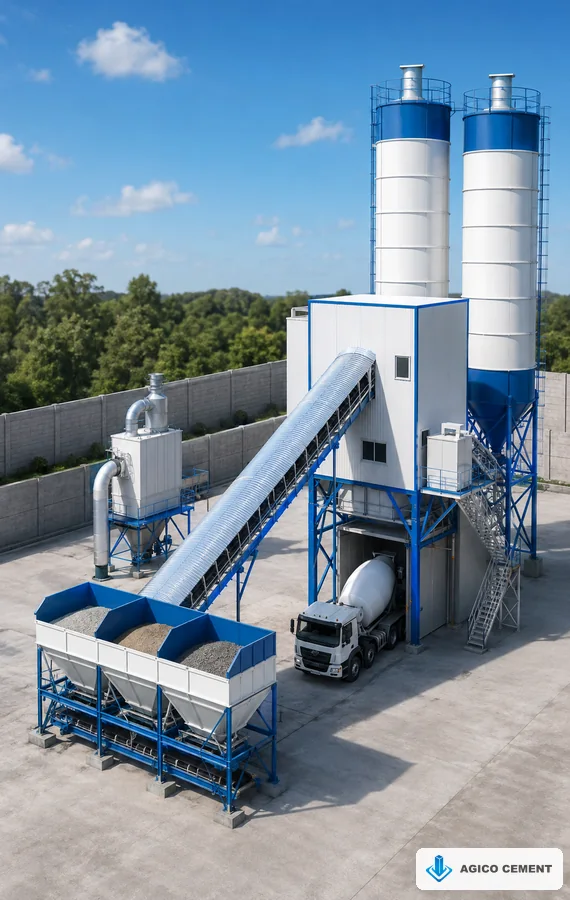
COMMERCIAL OUTPUT PLANNER
120 m³/h Central Mix Plant Planning Band
Use this band as an engineering starting point. Usable output depends on the recipe, cycle, material replenishment, truck exchange, and operating plan.
Market Profile
Established city ready-mix operation balancing repeat customers, varied grades, and daily peaks.
Dispatch Pattern
Coordinate recurring multi-truck release windows with a defined exchange route and loading position.
Mixer & Line Architecture
Match a commercial single line to batch size, cycle assumptions, and the active fleet plan.
Storage Strategy
Plan aggregate, powder, and admixture reserves for the intended daily recipe mix and supply schedule.
Resilience Requirement
Protect access for maintenance and identify practical tie-in points before market demand expands.
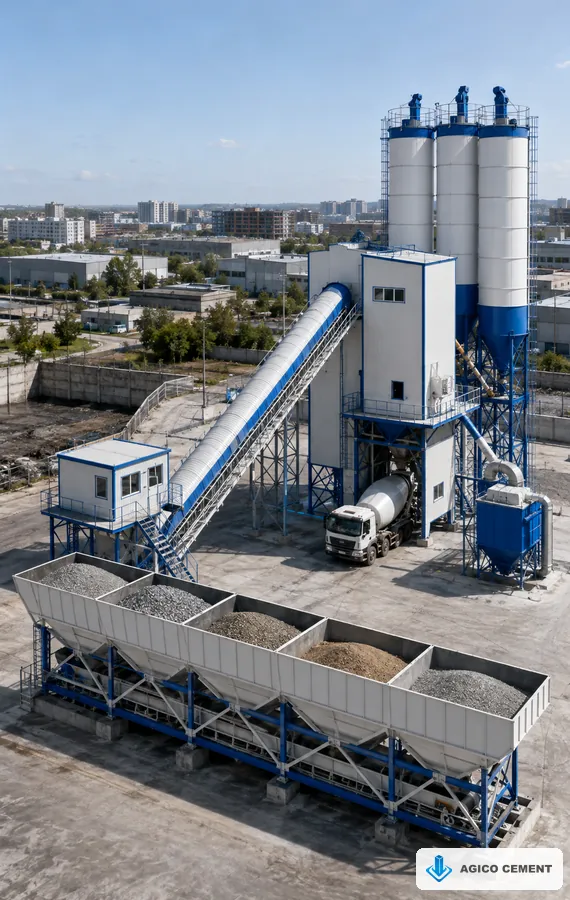
COMMERCIAL OUTPUT PLANNER
180 m³/h Central Mix Plant Planning Band
Use this band as an engineering starting point. Usable output depends on the recipe, cycle, material replenishment, truck exchange, and operating plan.
Market Profile
High-volume commercial supplier also preparing for major project dispatch peaks.
Dispatch Pattern
Model concentrated truck arrivals, loading clearance, and replenishment during sustained peak windows.
Mixer & Line Architecture
Review high-capacity single-line and twin-line logic against batch release and maintenance exposure.
Storage Strategy
Prioritize deeper material autonomy where sustained production must bridge delivery interruptions.
Resilience Requirement
Define maintenance isolation and recovery priorities before confirming the production architecture.
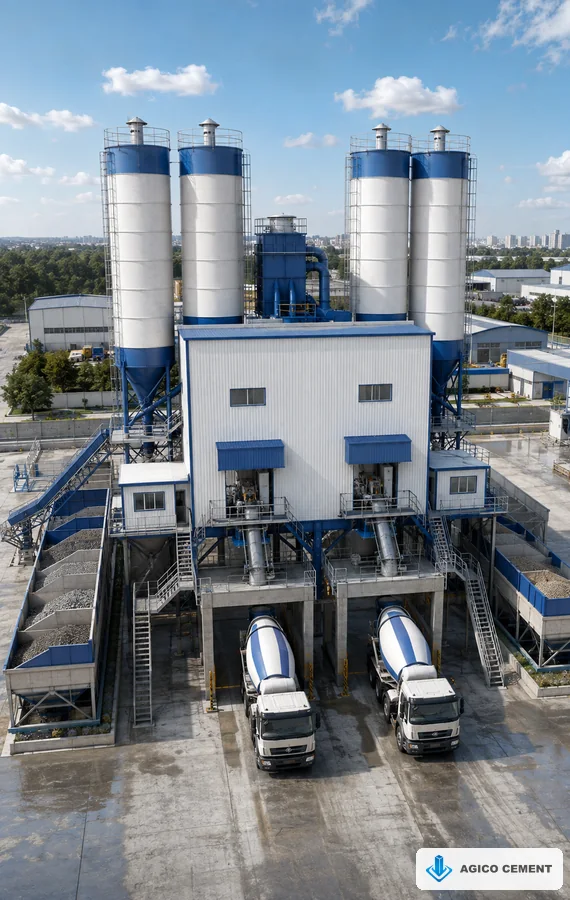
COMMERCIAL OUTPUT PLANNER
240–300 m³/h Central Mix Plant Planning Band
Use this band as an engineering starting point. Usable output depends on the recipe, cycle, material replenishment, truck exchange, and operating plan.
Market Profile
Regional production hub supporting broad market coverage and multiple demand channels.
Dispatch Pattern
Separate simultaneous loading flows and validate truck circulation for intense release periods.
Mixer & Line Architecture
Evaluate double-line capacity, coordination, and isolation as part of the base configuration.
Storage Strategy
Engineer high-throughput material separation and replenishment paths around the full recipe portfolio.
Resilience Requirement
Plan line independence, shared-system exposure, and staged expansion at the layout stage.
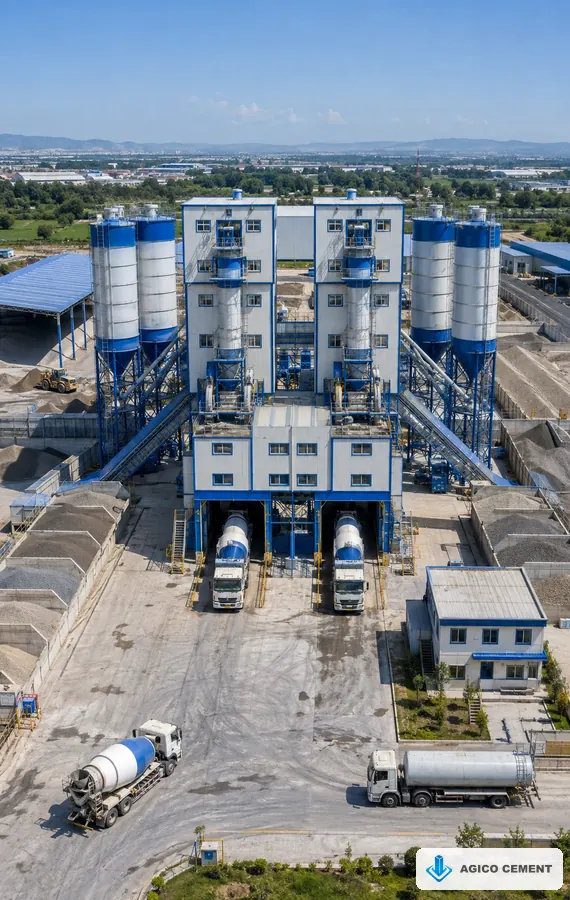
BUYER OUTCOMES
Commercial Value Starts With the Operating Condition
Each outcome depends on a defined plant mechanism and a project condition; the value cannot be separated from configuration and operating inputs.
More Predictable Batch Release
HOW THE SYSTEM SUPPORTS IT
Plant-side mixing completes the defined batch sequence before the truck leaves the loading point.
PROJECT CONDITION
The benefit depends on matched mixer cycles, truck exchange, and material feeding.
Faster Peak-hour Dispatch Planning
HOW THE SYSTEM SUPPORTS IT
A coordinated mixer and loading flow gives dispatch teams a stable basis for scheduling release windows.
PROJECT CONDITION
Peak planning still depends on fleet arrival discipline, site circulation, and replenishment.
Broader Concrete Product Portfolio
HOW THE SYSTEM SUPPORTS IT
Mixer action and configured dosing systems can support varied grades and demanding recipe families.
PROJECT CONDITION
Each product must be reviewed against mixer type, materials, sequence, and cleaning needs.
Lower Dependence on Truck Mixing
HOW THE SYSTEM SUPPORTS IT
The stationary mixer performs batch completion so the delivery fleet is not the primary mixing stage.
PROJECT CONDITION
Truck agitation and delivery procedures remain part of concrete handling after loading.
Better Production Traceability
HOW THE SYSTEM SUPPORTS IT
Independent weighing, control permissions, alarms, and batch records create a plant-side review trail.
PROJECT CONDITION
Useful traceability requires defined recipes, operator practices, record retention, and review ownership.
Expansion-ready Production Architecture
HOW THE SYSTEM SUPPORTS IT
Reserved space, interfaces, storage routes, and line logic can reduce disruption when capacity is added.
PROJECT CONDITION
Expansion provisions must be chosen during layout and utility planning, not assumed after installation.
SYSTEM CONFIGURATION
Select Each System by Its Commercial Job
Review what each plant system changes commercially, how it produces that result, and which buyer input controls selection.
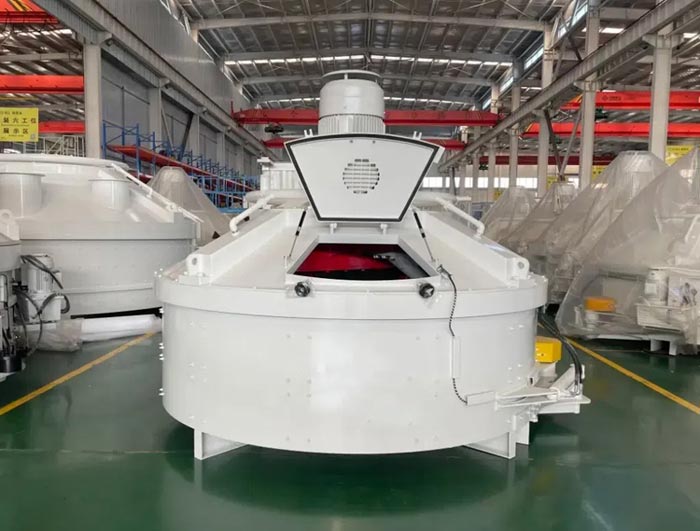
Mixer
COMMERCIAL OUTCOME
Align the concrete portfolio with a defined plant-side mixing action and batch release cycle.
SYSTEM MECHANISM
Mixer geometry, batch size, drive, discharge, and wear arrangement shape each production sequence.
SELECTION INPUT
Provide concrete families, target slump ranges, materials, batch demand, and cleaning plan.
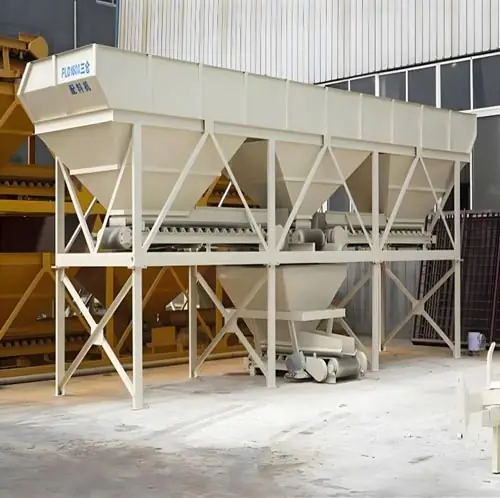
Aggregate Storage
COMMERCIAL OUTCOME
Sustain scheduled production while keeping aggregate grades separated for the sales mix.
SYSTEM MECHANISM
Bin count, live capacity, feeding route, and replenishment access determine material continuity.
SELECTION INPUT
Provide aggregate grading, consumption profile, delivery vehicle, and replenishment frequency.
Powder & Admixture System
COMMERCIAL OUTCOME
Support the intended binder and admixture portfolio without avoidable material-change constraints.
SYSTEM MECHANISM
Silo allocation, conveying paths, dosing points, and tank segregation define recipe availability.
SELECTION INPUT
List cementitious materials, admixtures, consumption rates, delivery methods, and segregation rules.

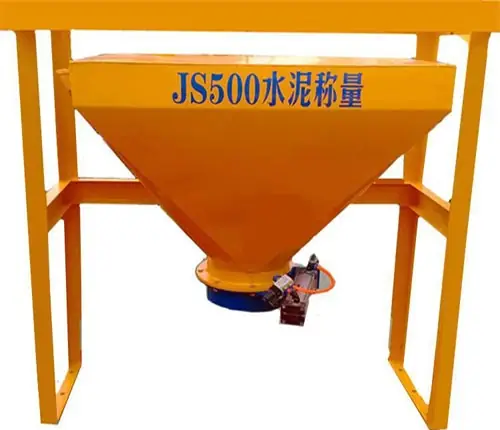
Independent Weighing
COMMERCIAL OUTCOME
Make target and actual material data visible for batch review and exception handling.
SYSTEM MECHANISM
Dedicated scales and sequenced dosing isolate material measurements before mixer charging.
SELECTION INPUT
Confirm material types, batch sizes, dosing sequence, tolerance policy, and calibration procedure.
PLC & Production Records
COMMERCIAL OUTCOME
Give production teams controlled recipes, operating visibility, and retrievable batch information.
SYSTEM MECHANISM
Permissions, alarms, reports, interfaces, and record storage connect plant operation with oversight.
SELECTION INPUT
Define user roles, report fields, integration boundaries, languages, and record-retention needs.

Single- or Double-line Architecture
COMMERCIAL OUTCOME
Balance peak demand, maintenance flexibility, and expansion strategy at plant level.
SYSTEM MECHANISM
Line count and shared-system design determine parallel production and shutdown exposure.
SELECTION INPUT
Provide peak demand, product overlap, maintenance plan, redundancy priorities, and growth scenario.
CONFIGURATION TRADEOFFS
Four Decisions That Shape the Investment
Compare fit, buyer advantage, tradeoff, and the input needed before selecting the configuration path.
DECISION 01
Twin-shaft vs Planetary Mixer
BEST FIT
Compare mixer actions against ready-mix volume, specialty recipes, batch size, and cleaning frequency.
BUYER ADVANTAGE
A recipe-led choice keeps the mixing system aligned with the concrete products being sold.
TRADEOFF
Mixer geometry changes equipment layout, wear strategy, discharge arrangement, and maintenance access.
REQUIRED INPUT
Submit recipe families, material behavior, batch demand, discharge route, and washdown practice.
DECISION 02
Single-line vs Double-line
BEST FIT
Use peak demand, product overlap, and acceptable shutdown exposure to compare one or two lines.
BUYER ADVANTAGE
The selected line structure can prioritize straightforward operation or parallel production flexibility.
TRADEOFF
A second line adds equipment, controls, interfaces, footprint, and shared-system coordination.
REQUIRED INPUT
Submit peak dispatch windows, maintenance strategy, redundancy need, site limits, and expansion case.
DECISION 03
Standard vs Customized Configuration
BEST FIT
Start from a standard flow, then customize only where materials, recipes, site, or interfaces require it.
BUYER ADVANTAGE
Controlled customization directs engineering effort toward constraints that affect operation.
TRADEOFF
Project-specific interfaces add design review, documentation, manufacturing, and acceptance requirements.
REQUIRED INPUT
Submit local material data, environmental limits, utility standards, integrations, and compliance inputs.
DECISION 04
New Production Base vs Retrofit
BEST FIT
Compare an unconstrained new layout with reuse of verified structures, utilities, and material systems.
BUYER ADVANTAGE
Early interface review clarifies which existing assets can remain within the new production plan.
TRADEOFF
Retrofit work carries survey, compatibility, outage, access, and tie-in constraints.
REQUIRED INPUT
Submit measured drawings, equipment records, structural data, utility capacity, and outage windows.
APPLICATION PATHS
Central Mix Applications by Commercial Model
Start with the sales and production model, then define the plant response and engineering inputs for that application.
APPLICATION 01
Commercial Ready-Mix Supply
BUYER NEED
Serve multiple recipes, daily truck dispatch, regional delivery, and changing market demand.
PLANT RESPONSE
Coordinate plant-side mixing, batch records, storage, and truck exchange around the commercial sales plan.
SELECTION INPUT
Define average and peak demand, product mix, fleet payload, dispatch windows, and delivery zones.
APPLICATION 02
Infrastructure Concrete Supply
BUYER NEED
Prepare for placement peaks, documented production, sustained volume, and project logistics.
PLANT RESPONSE
Configure material autonomy, release planning, and production records around the approved project supply plan.
SELECTION INPUT
Define pour schedule, concrete classes, record requirements, access constraints, and continuity priorities.
APPLICATION 03
Precast, RCC & Specialty Concrete
BUYER NEED
Produce intensive, low-slump, or otherwise demanding recipes with controlled dosing sequences.
PLANT RESPONSE
Match mixer action, material segregation, weighing, and discharge interfaces to the specialty process.
SELECTION INPUT
Define product type, recipe materials, consistency range, batch destination, and changeover procedure.
COMMERCIAL SCOPE
Central Mix Plant Price and Investment Scope
A useful quotation compares the same equipment, site, service, and responsibility boundary without relying on unsupported headline prices.
Mixer & Line Architecture
Mixer type, batch size, discharge arrangement, and line count define the core production equipment.
QUOTATION INPUT
Confirm recipe portfolio, peak demand, batch volume, line preference, and maintenance strategy.
Storage Autonomy
Aggregate bins, powder silos, admixture tanks, and replenishment routes shape material availability.
QUOTATION INPUT
Confirm material varieties, consumption profile, delivery method, and desired operating autonomy.
Conveying & Weighing
Transfer routes, scale allocation, dosing sequence, and charging method change system complexity.
QUOTATION INPUT
Confirm material properties, target batches, process sequence, and site elevation constraints.
Environmental Controls
Enclosures, dust collection, water handling, and noise measures depend on the site requirement.
QUOTATION INPUT
Confirm local environmental limits, enclosure level, water plan, and neighboring land use.
Controls & Integration
Record fields, operator permissions, reporting, and external interfaces define the control boundary.
QUOTATION INPUT
Confirm languages, user roles, data outputs, integration points, and cybersecurity responsibilities.
Delivery, Civil & Service Scope
Freight, foundations, erection, commissioning, training, and spares depend on the responsibility split.
QUOTATION INPUT
Confirm destination, site access, local contractors, service expectations, and target handover window.
Responsibility Matrix
CONFIGURATION RISK REVIEW
The Commercial Cost of a Wrong Configuration
Each risk can be reduced by defining the operating condition and engineering input before the supply boundary is approved.
Mixer Bottleneck
COMMERCIAL EFFECT
Truck and batching capacity remain underused when the mixer cycle cannot support peak release demand.
ENGINEERING MITIGATION INPUT
Model recipe-specific cycle steps, batch size, discharge time, truck exchange, and peak schedule together.
Truck Queuing
COMMERCIAL EFFECT
Congested arrival and loading routes disrupt dispatch sequence even when production equipment is available.
ENGINEERING MITIGATION INPUT
Provide fleet size, payload, arrival pattern, gate plan, turning envelope, and loading clearance.
Insufficient Storage
COMMERCIAL EFFECT
Material replenishment interrupts the planned production window or limits the active recipe mix.
ENGINEERING MITIGATION INPUT
Map consumption, supplier lead times, delivery vehicle capacity, grade separation, and contingency stock.
Maintenance Shutdown
COMMERCIAL EFFECT
A single critical asset can stop all batch release when isolation and recovery were not planned.
ENGINEERING MITIGATION INPUT
Define acceptable outage, service access, critical spares, bypass limits, and line-independence priorities.
Restricted Recipe Range
COMMERCIAL EFFECT
Missing material paths or unsuitable mixing action can block future products from the sales portfolio.
ENGINEERING MITIGATION INPUT
Review current and planned recipes, segregation, dosing points, mixer action, and cleaning sequence.
Expensive Expansion
COMMERCIAL EFFECT
Late additions can require relocation or replacement when space, utilities, and interfaces were omitted.
ENGINEERING MITIGATION INPUT
Define a growth scenario and reserve verified footprints, structural loads, power, controls, and tie-in routes.
PRODUCT ADVANTAGES
Why Choose an AGICO Central Mix Concrete Plant
The advantage is not one component in isolation, but how the complete plant is configured to protect mixing consistency, usable output and maintainability.
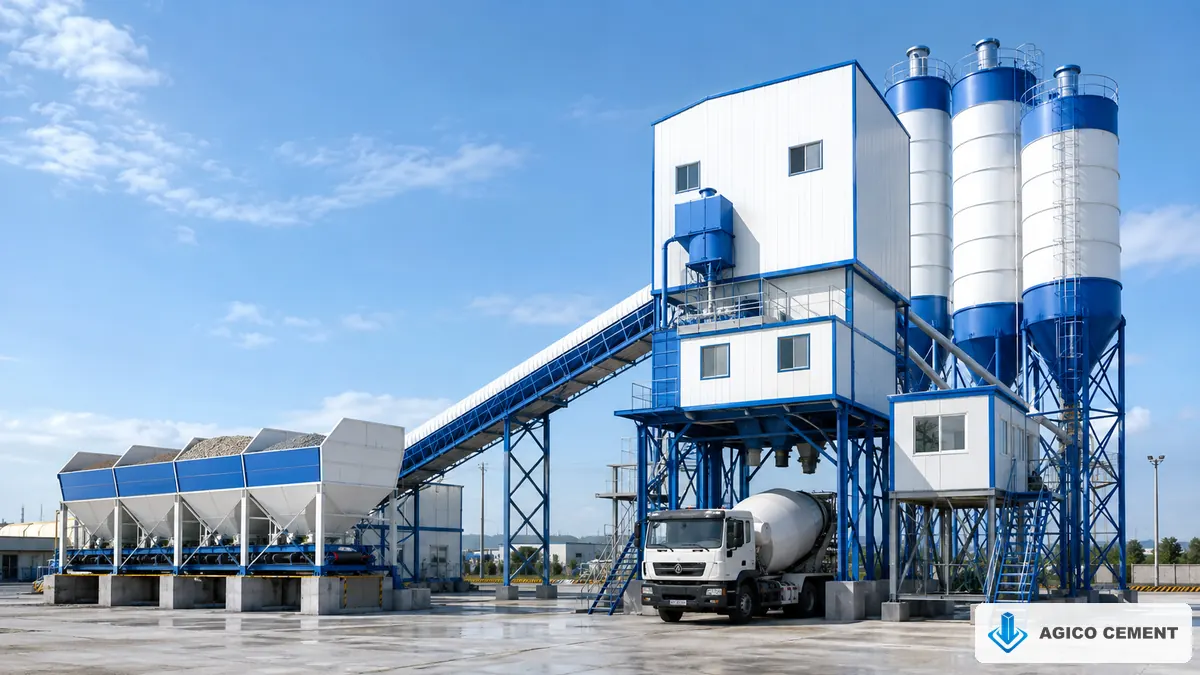
Forced Central Mixing
Complete the designed mixing cycle in a stationary mixer before truck loading for tighter plant-side process control.
Independent Material Weighing
Coordinate aggregate, powder, water and admixture dosing through material-specific weighing circuits.
Single- or Double-line Engineering
Match line architecture to dispatch peaks, maintenance windows, recipe separation and production resilience.
Mixer Selection by Concrete Demand
Evaluate twin-shaft and planetary options against aggregate grading, batch size, cycle target and concrete type.
Batch Traceability
Retain recipe targets, actual weights, cycle timing, alarms and operator actions for production review.
Modular Plant Configuration
Adapt storage, conveying, weighing, mixing and environmental controls to the site and supply plan.
Maintenance-access Planning
Engineer inspection routes, wear-part replacement, cleaning points and safe service access into the layout.
Production Resilience
Plan buffer storage, critical spares and optional redundancy around the cost of interrupted concrete supply.
QUALITY CHECKPOINTS
Control the Batch Before It Reaches the Truck
A central mix plant shifts critical quality decisions into the plant process.
Material Status
Storage and feed readiness.
Weight Status
Target versus actual values.
Moisture Input
Recipe adjustment context.
Mixing Cycle
Time and operating state.
Release
Discharge authorization.
QUALITY CHECKS BEFORE DISCHARGE
Central Mix Concrete Quality Control System
Turn production data into a clear release decision before the truck leaves the plant.
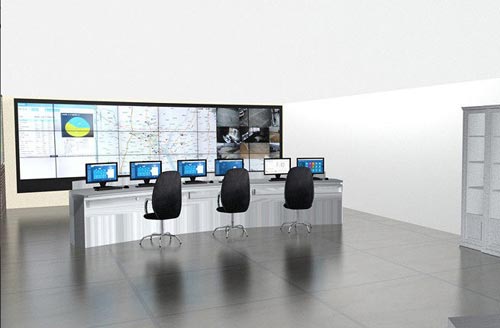
Control and Traceability
Scale feedback, interlocks and production records support the release decision for each batch.
Recipe
Use the approved mix design and material targets.
Weighing
Compare target and actual values for each material.
Moisture Correction
Apply the confirmed aggregate-moisture input to water demand.
Mixing
Complete the defined charging and mixing sequence.
Verification
Check completion status, alarms and release conditions.
Discharge
Route the finished batch to the assigned loading lane and record.
CORE EQUIPMENT SYSTEMS
Details of AGICO’s Central Batching Plant
Review how the main equipment systems store, measure, move, mix and control materials before truck loading.
01 · MIXING SYSTEM
Twin-shaft or Planetary Forced Mixing
The mixer receives weighed aggregate, powder, water and admixtures through dedicated inlets, then completes the defined mixing cycle before discharge.
Concrete type, batch volume, aggregate size and production rhythm determine the appropriate mixer.
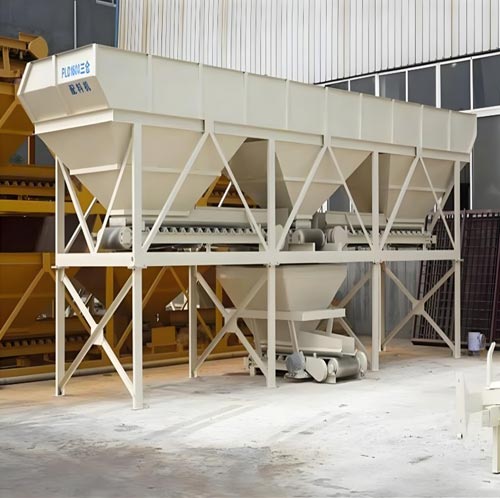
02 · MATERIAL FLOW
Aggregate Batching and Conveying
Multi-compartment bins separate aggregate grades before controlled feeding to the weighing and inclined conveying system.
03 · POWDER SUPPLY
Powder Storage and Conveying
Cement and supplementary materials are stored separately and transferred by enclosed screw conveyors to the powder scale.
04 · DOSING ACCURACY
Independent Weighing System
Aggregate, powder, water and admixtures use material-appropriate scales before coordinated release into the mixer.
05 · PRODUCTION CONTROL
Electrical Control System
The PLC and operator interface coordinate recipes, weighing, mixing, interlocks, alarms and batch records for both production lines.
DISPATCH ENGINEERING
Design the Truck-loading Logic With the Plant
Mixer discharge height, truck approach, queuing space and batch-to-truck coordination affect the real usable output of a central mix facility.
Central Dispatch Chain
PRODUCTION-TO-LOGISTICS LINK
Central Mix Plant Dispatch Planner
Nameplate output matters only when trucks, loading clearance and placement can keep pace.
Demand Profile
Separate average demand from peak placement windows.
Cycle Reality
Test charging, mixing and discharge with the intended concrete.
Truck Exchange
Plan approach, loading, washout and exit.
Storage Autonomy
Size storage around delivery reliability and shift plan.
REAL PROJECT EVIDENCE
AGICO Concrete Batching Plant Project References
Use these real installations to discuss site conditions, capacity bands, structural interfaces and delivery boundaries with the engineering team.
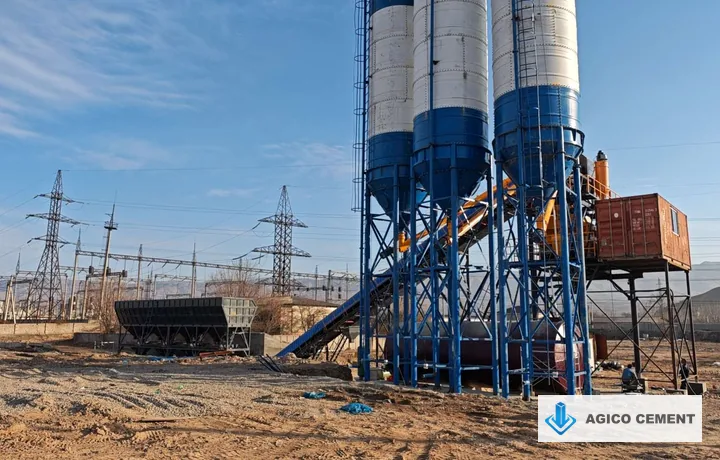
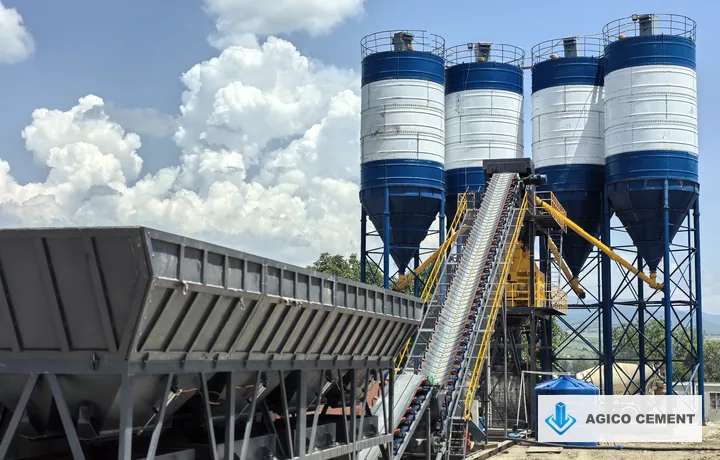
UZBEKISTAN
120 m³/h Plant
A completed overseas batching-plant reference showing the storage, transfer and production structures installed at the project site.
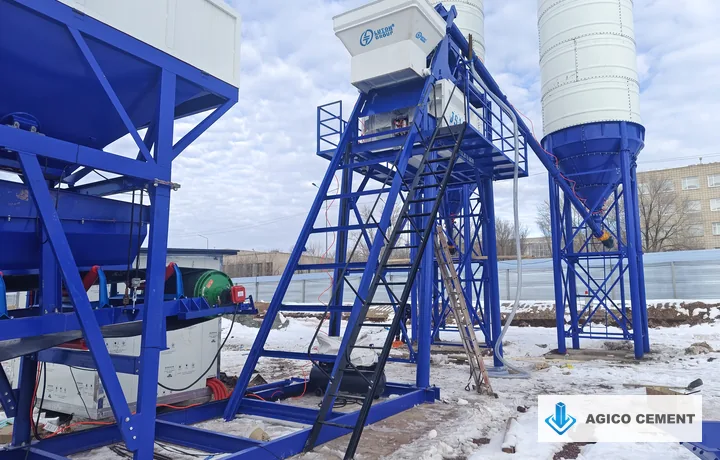
GEORGIA
180 m³/h Foundation-free Plant
A high-output project reference with four powder silos and an elevated transfer route configured for rapid site deployment.
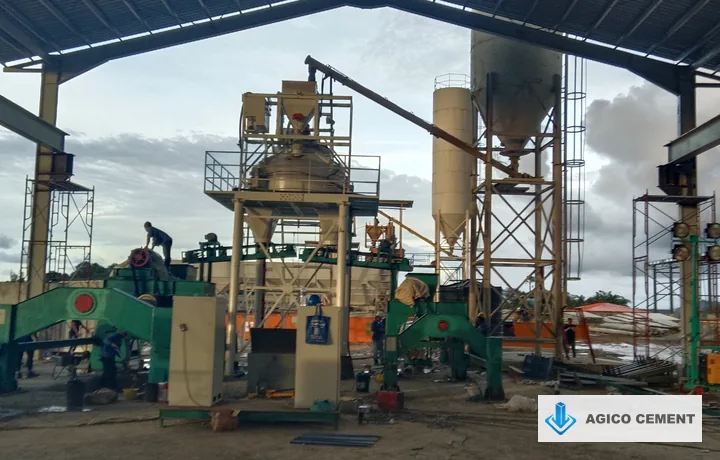
DR CONGO
60 m³/h Plant
An installation-stage reference that makes the structural interfaces, access points and site assembly requirements visible.
RUSSIA
50 m³/h Covered Plant
A compact production reference installed under a roof where enclosure, maintenance clearance and material routing are important.
PROJECT DELIVERY CONTROL
Reduce Central Mix Plant Delivery and Startup Risk
A complete plant purchase is successful only when engineering boundaries, site readiness, commissioning and handover are coordinated.
Engineering Confirmation
Confirm process flow, layout, utility loads, foundations, environmental controls and interface boundaries before release.
Manufacturing & Inspection
Track fabrication, purchased components, assembly checks and shipment preparation against the approved configuration.
Installation & Commissioning
Coordinate erection, wiring, calibration, dry runs, loaded trials and operator handover around site readiness.
Lifecycle Support
Prepare training, recommended spares, remote diagnostics and maintenance access for sustained operation.
FACTORY-BACKED SUPPLY
How AGICO Manufactures and Prepares a Central Mix Plant
The production evidence below connects the commercial proposal with real fabrication, component preparation and pre-shipment inspection work.
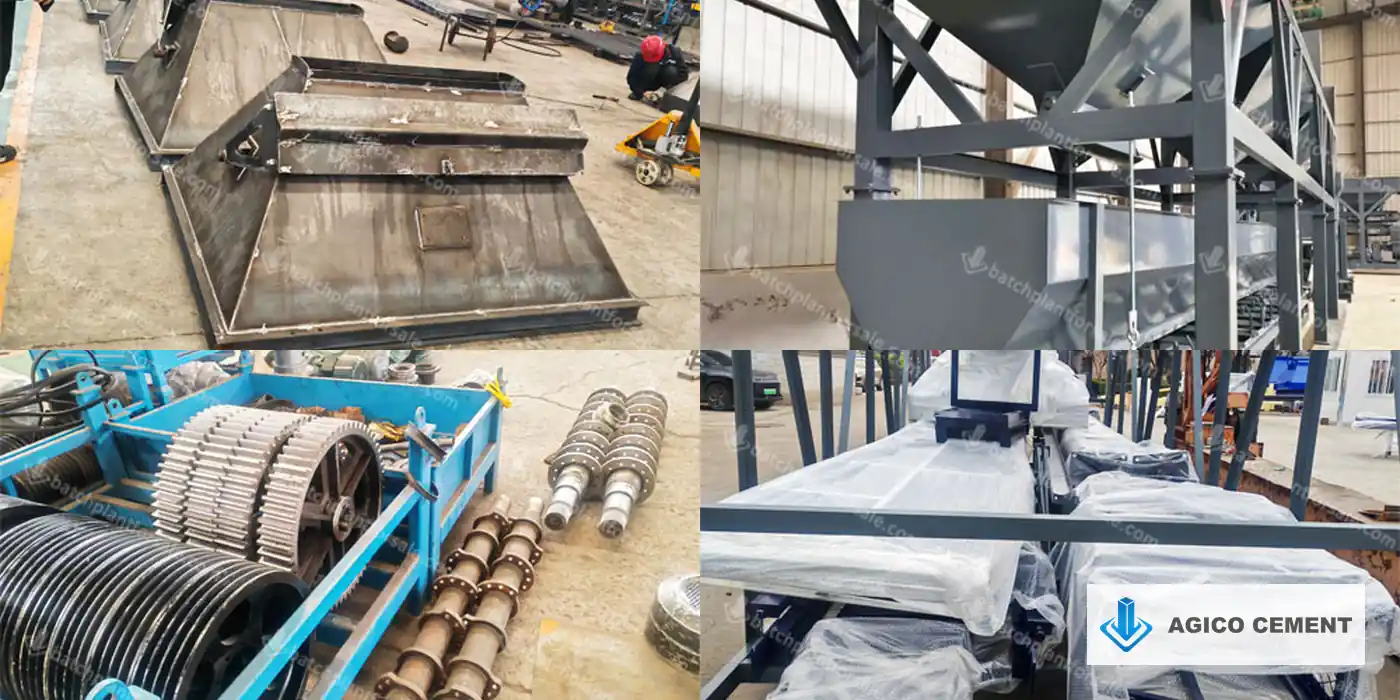
FABRICATION IN PROGRESS
Steel Batching Structures Built for the Approved Configuration
Real workshop evidence helps buyers review fabrication scope, maintainability and inspection points before shipment.
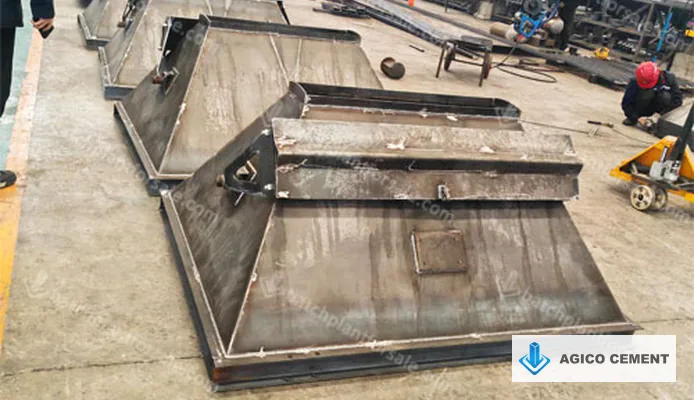
Steel Hopper Fabrication
Batching hopper sections are fabricated and welded before surface treatment and coordinated assembly.
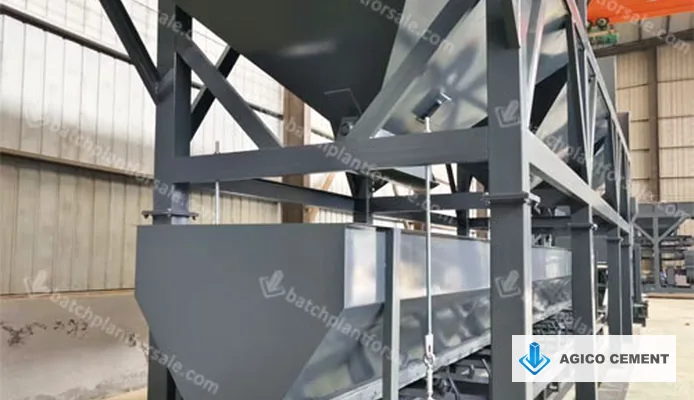
Batching Hopper Assembly
Hopper geometry, discharge interfaces and support structures are checked in the workshop.
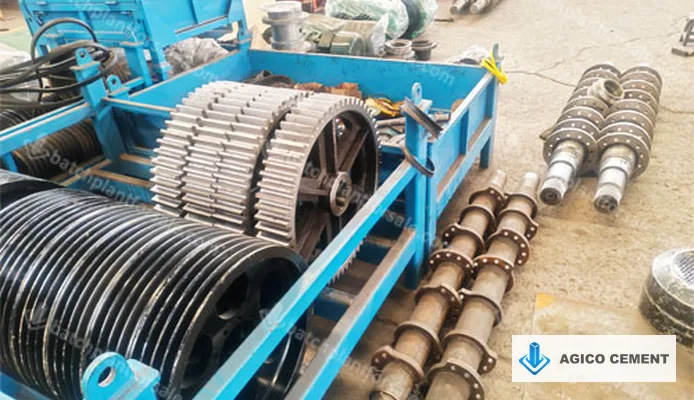
Transmission Components
Gears, shafts and rotating parts are prepared for equipment assembly and inspection.
COMPLETE-PLANT DELIVERY RESPONSIBILITY
Why AGICO for a Commercial Concrete Business
Why Work With AGICO as Your Central Mix Plant Supplier: evaluate the engineering, manufacturing, interface, delivery, commissioning, and lifecycle work required to connect the complete plant.
Demand and Capacity Modelling
Translate average demand, peak windows, recipes, fleet exchange, and operating shifts into sizing assumptions.
Complete Production-system Coordination
Coordinate mixer, storage, conveying, weighing, admixture, discharge, and control interfaces as one plant flow.
Single- and Double-line Engineering
Compare line count, shared systems, peak operation, isolation, and future tie-ins against the business plan.
Layout and Site-interface Support
Develop equipment arrangement inputs for foundations, utilities, maintenance access, and truck circulation.
Manufacturing and Inspection Coordination
Organize fabrication scope, inspection points, documentation, and release status for the agreed equipment.
Export Packing and Delivery Sequencing
Plan packing identification and shipment order around destination handling and installation sequence.
Installation and Commissioning Support
Define supervision, system checks, startup sequence, and handover activities within the agreed service scope.
Training, Spares and Lifecycle Assistance
Prepare operator training topics, recommended spares, maintenance information, and ongoing support boundaries.
SEVEN CONTROLLED PROJECT STAGES
Project Delivery Roadmap
At every stage, define what the buyer supplies, what AGICO returns, and what must be accepted before the project advances.
01 / Demand Review
BUYER INPUT
Market demand, recipes, fleet, shifts, site, destination, and target commissioning window.
AGICO OUTPUT
Documented design basis, open questions, and the production assumptions requiring confirmation.
ACCEPTANCE POINT
Buyer and supplier align on demand scenarios and the information still outstanding.
02 / Configuration
BUYER INPUT
Preferred capacity, material systems, redundancy priorities, controls, and responsibility boundary.
AGICO OUTPUT
Proposed mixer, line, storage, weighing, conveying, control, and service configuration.
ACCEPTANCE POINT
Buyer confirms the technical-commercial scope used for the proposal.
03 / Layout & Interfaces
BUYER INPUT
Survey, geotechnical basis, utilities, access, truck route, local works, and expansion envelope.
AGICO OUTPUT
Equipment arrangement and interface information for civil, utility, access, and installation planning.
ACCEPTANCE POINT
Project parties approve interface responsibilities and freeze the agreed layout basis.
04 / Manufacturing
BUYER INPUT
Approved documents, required witness points, destination markings, and communication contacts.
AGICO OUTPUT
Fabrication coordination, agreed inspection records, packing preparation, and progress communication.
ACCEPTANCE POINT
Equipment reaches the agreed release condition before packing and shipment.
05 / Delivery
BUYER INPUT
Receiving plan, import arrangements, unloading resources, secure storage, and site readiness status.
AGICO OUTPUT
Packing information, shipment sequence, document package, and delivery coordination within scope.
ACCEPTANCE POINT
Consignee checks received packages and records shipping or handling exceptions.
06 / Installation & Commissioning
BUYER INPUT
Completed civil works, connected utilities, local labor, lifting equipment, materials, and safe access.
AGICO OUTPUT
Agreed erection guidance, system checks, startup support, operator instruction, and issue records.
ACCEPTANCE POINT
Defined commissioning checks and outstanding actions are jointly recorded.
07 / Handover
BUYER INPUT
Named operating team, accepted training schedule, documentation review, and maintenance ownership.
AGICO OUTPUT
Handover package, operating information, recommended spares list, and support contacts within scope.
ACCEPTANCE POINT
Both parties record handover status, remaining obligations, and the lifecycle support boundary.
THE EIGHT INPUTS THAT SHARPEN A PROPOSAL
Qualified Commercial Plant Proposal
Share the operating facts that change equipment selection, interfaces, supply boundaries, and commissioning planning; concise confirmed inputs make the inquiry more useful.
Hourly Demand
Average production requirement, peak hourly window, seasonal variation, and expected demand growth.
Daily Production & Shifts
Planned daily volume, operating days, shift length, changeovers, cleaning, and maintenance windows.
Concrete Portfolio
Concrete grades, consistency ranges, specialty recipes, batch sizes, and release requirements.
Materials
Aggregate grading, cementitious materials, admixtures, delivery methods, and storage constraints.
Truck Fleet & Dispatch
Truck count, payload, loading arrangement, arrival pattern, dispatch window, and delivery zones.
Site & Expansion Space
Site dimensions, levels, access, truck route, maintenance clearances, and reserved growth area.
Utilities, Climate & Environment
Power standard, water supply, climate conditions, enclosure needs, and local environmental limits.
Destination & Commissioning Target
Destination country, delivery access, import responsibilities, local work plan, and target startup date.
CENTRAL MIX PROCUREMENT QUESTIONS
Commercial Buyer FAQ
Use these answers to define the next engineering discussion; the final proposal must still confirm project-specific assumptions and boundaries.
It merits review when plant-side batch completion, concentrated dispatch, varied products, or production records support the business plan. Compare those needs with utilization, maintenance capability, utilities, and alternatives.
Usable output is evaluated from recipe steps, batch size, mixer cycle, material feeding, discharge, truck exchange, replenishment, and the operating schedule. The rated capacity alone does not define delivered production.
Review two lines when peak demand, parallel products, maintenance flexibility, or staged growth justify added equipment and coordination. Shared storage, conveying, loading, controls, footprint, and utilities must also be checked.
Select the mixer from concrete families, materials, consistency, batch demand, discharge route, cleaning, and maintenance practice. Twin-shaft and planetary options serve different production priorities.
It can be configured for suitable precast, RCC, or specialty recipes when mixer action, material segregation, dosing, discharge, and product handling are reviewed for those products before selection.
The scope follows mixer and line architecture, storage autonomy, conveying and weighing, environmental controls, automation interfaces, freight, civil responsibilities, erection, commissioning, training, and spares.
Provide measured dimensions, levels, geotechnical basis, access, truck movement, utilities, environmental constraints, local-work boundaries, maintenance clearances, and future expansion space.
Support can be defined for installation guidance, system checks, startup, operator instruction, handover records, and recommended spares. The proposal should state the exact service scope and buyer responsibilities.
QUALIFIED COMMERCIAL PLANT PROPOSAL
Build the Central Mix System Around Your Market Demand
Share demand, fleet, recipes, materials, site conditions, and target timeline so the configuration and supply boundary can be evaluated together.