Permanent Concrete Production Base
Stationary Concrete Batching Plant
Plan a stable, high-output concrete production base around real dispatch demand, material logistics, site conditions and long-term expansion.
25–300 m³/h
Engineering range
Single / Twin Line
Production architecture
PLC Control
Repeatable quality
Project Engineering
Site-specific configuration
30+ Years
Concrete plant engineering
3,000+
Plants installed
25–300 m³/h
Stationary output range
24/7
Technical service
Engineered for Continuous Production
A Permanent Production Base for Demanding Concrete Supply
A stationary concrete batching plant creates the most value when stable output, repeatable mix quality and long-term operating efficiency matter more than frequent relocation.
Ready-Mix Producers
Repeatable commercial concrete supply
Infrastructure Contractors
High-volume project schedules
Industrial Projects
Reliable site-based production
Precast Operations
Controlled recipes and consistency
Permanent-Site Suitability
Is a Permanent Concrete Production Base the Right Strategy?
A stationary plant is strongest when the project supports a long operating horizon, dependable material replenishment and disciplined truck circulation.
STRONG FIT
Long Operating Horizon
Stable multi-year commercial or project demand.
STRONG FIT
Predictable Material Supply
Reliable aggregate, cement, water and additive replenishment.
REVIEW
Limited Site Area
Requires detailed footprint, storage and vehicle-flow planning.
REVIEW
Frequent Relocation
A mobile solution may be more suitable.
Production Demand & Peak Dispatch
Plan Capacity Around Operating Reality, Not a Nameplate Number
Choose a production pattern to compare the recommended operating concept.
Recommended Operating Concept
Steady Local Supply
Establish the production architecture before selecting the final model. Validate truck arrival windows, recipe changes and reserve capacity.
Production Pattern
Stable local deliveries
Line Strategy
Single-line daily production
Planning Priority
Storage continuity
Recommended Operating Concept
Commercial Dispatch
Establish the production architecture before selecting the final model. Validate truck arrival windows, recipe changes and reserve capacity.
Production Pattern
Multi-shift truck dispatch
Line Strategy
Single line with expansion reserve
Planning Priority
Truck circulation
Recommended Operating Concept
Infrastructure Peak
Establish the production architecture before selecting the final model. Validate truck arrival windows, recipe changes and reserve capacity.
Production Pattern
Peak project schedules
Line Strategy
High-output engineered line
Planning Priority
Material logistics
Recommended Operating Concept
Regional Production Hub
Establish the production architecture before selecting the final model. Validate truck arrival windows, recipe changes and reserve capacity.
Production Pattern
Parallel dispatch demand
Line Strategy
Twin-line production base
Planning Priority
Uptime and redundancy
Engineering Model Check
Translate the Demand Plan Into a Stationary Plant Configuration
Select a theoretical output to update the plant concept and core configuration.
Selected Configuration
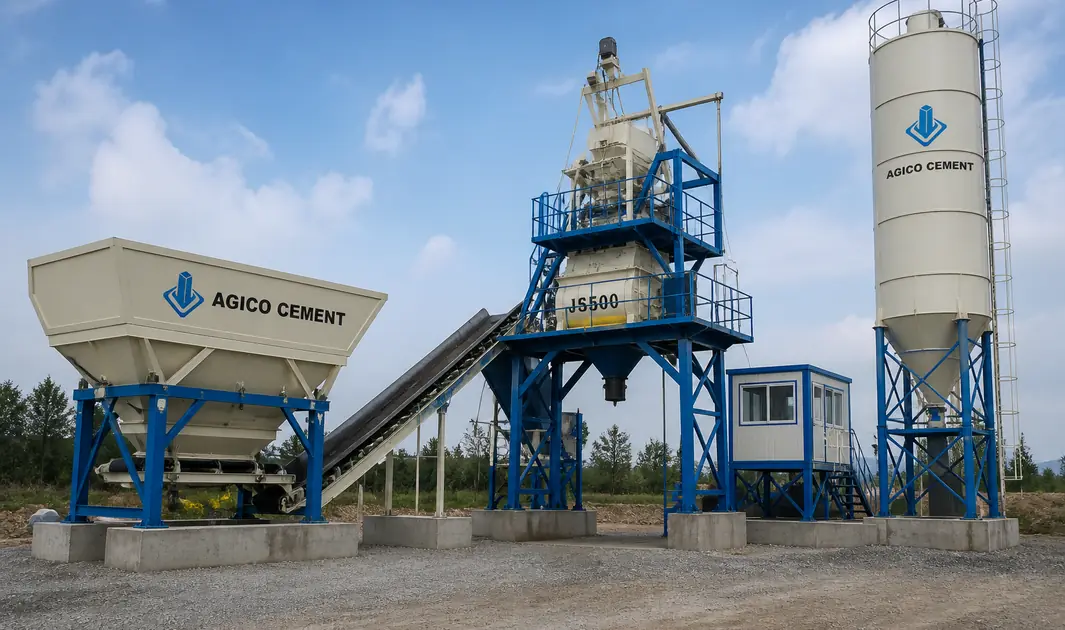
25 m³/h Stationary Plant
A compact permanent production base for controlled local demand, with a smaller footprint, focused storage and straightforward daily operation.
Technical Specifications
Capacity and Core Configuration
Theoretical Output
25 m³/h
Concrete Mixer
JS500
Installed Power
50.25 kW
Operating Concept
Compact local base
Selected Configuration
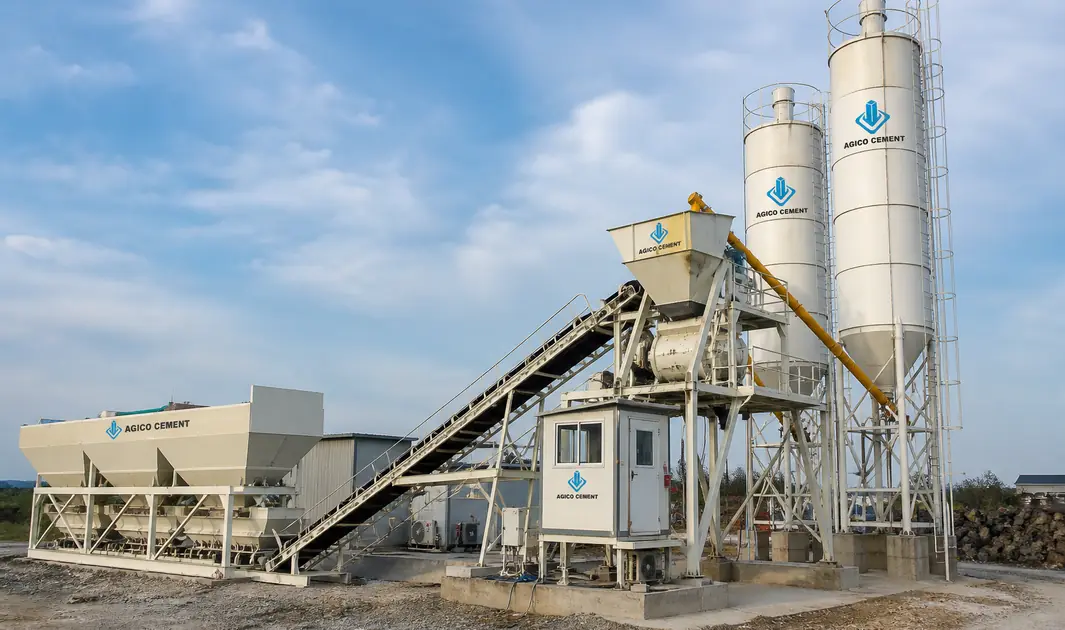
35 m³/h Stationary Plant
Adds production reserve for municipal and small commercial programs while retaining a space-efficient single-line stationary layout.
Technical Specifications
Capacity and Core Configuration
Theoretical Output
35 m³/h
Concrete Mixer
JS750
Installed Power
75 kW
Operating Concept
Small commercial base
Selected Configuration
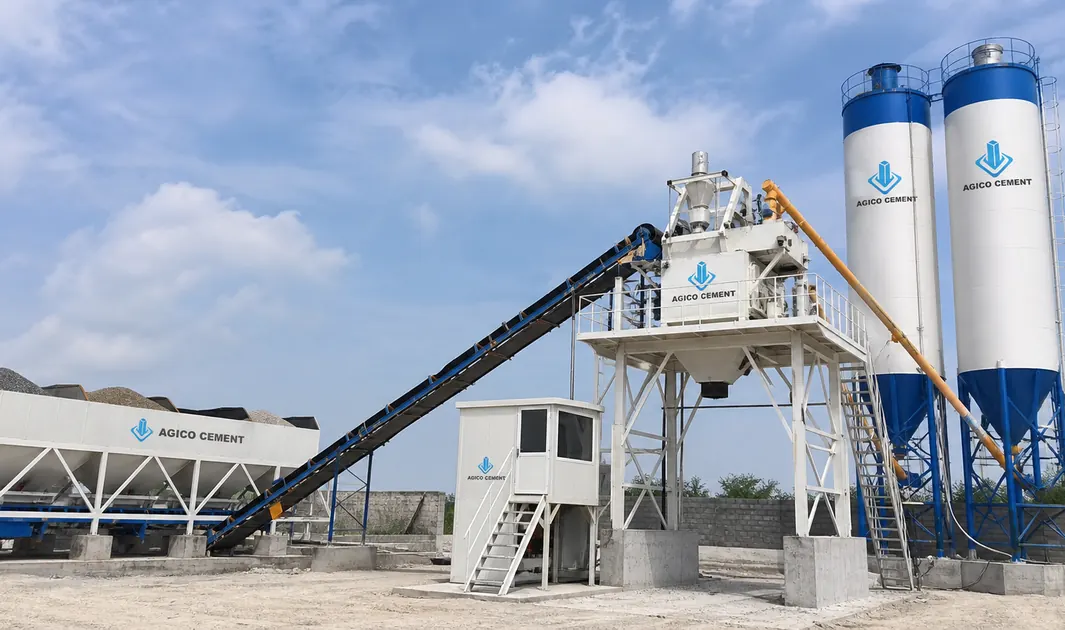
50 m³/h Stationary Plant
Supports a growing supply base with a larger mixer, broader recipe coverage and storage sized for regular multi-project demand.
Technical Specifications
Capacity and Core Configuration
Theoretical Output
50 m³/h
Concrete Mixer
JS1000
Installed Power
115 kW
Operating Concept
Growing supply base
Selected Configuration
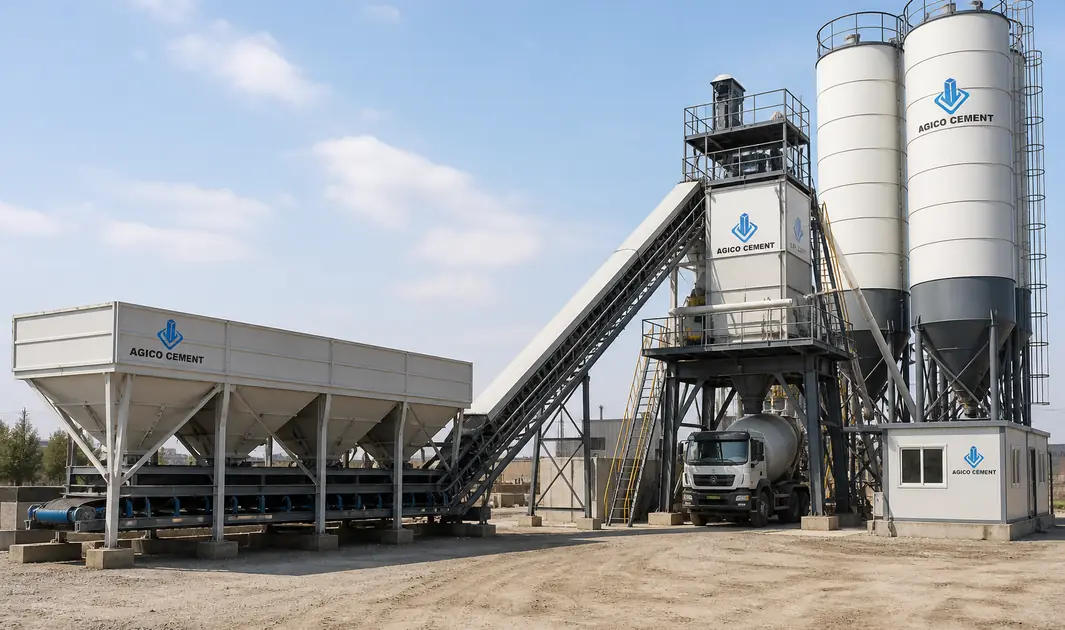
60 m³/h Stationary Plant
Combines a 60-second production rhythm with practical power demand for consistent commercial dispatch across extended shifts.
Technical Specifications
Capacity and Core Configuration
Theoretical Output
60 m³/h
Concrete Mixer
JS1000
Installed Power
105 kW
Operating Concept
Commercial dispatch
Selected Configuration
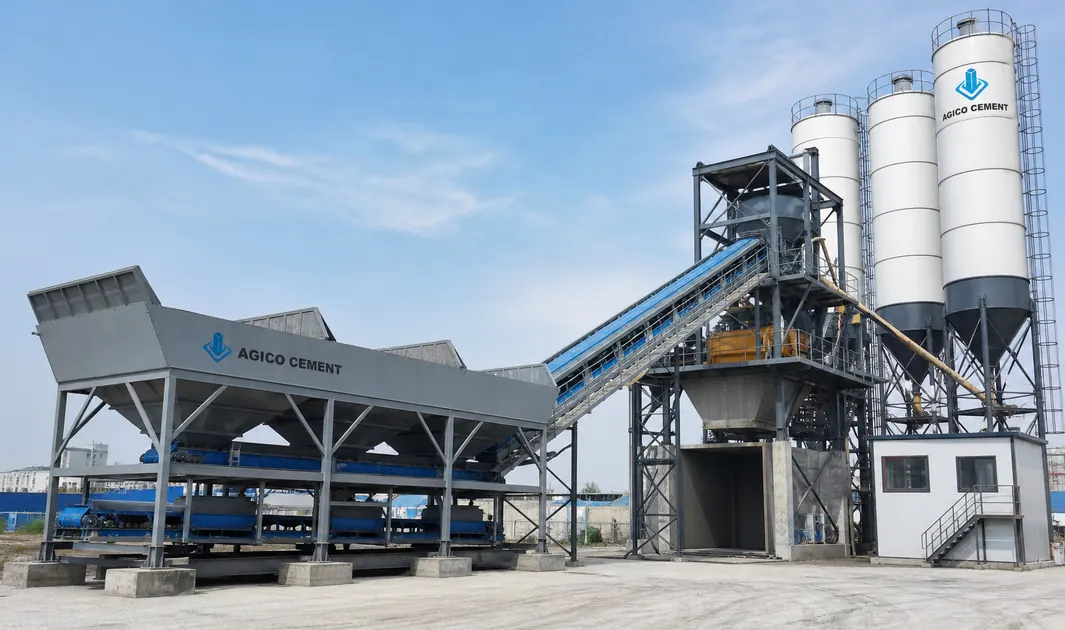
75 m³/h Stationary Plant
Provides larger batch volume for urban contractors that need flexible daily output, multiple recipes and denser truck-loading windows.
Technical Specifications
Capacity and Core Configuration
Theoretical Output
75 m³/h
Concrete Mixer
JS1500
Installed Power
120 kW
Operating Concept
Urban contractor base
Selected Configuration
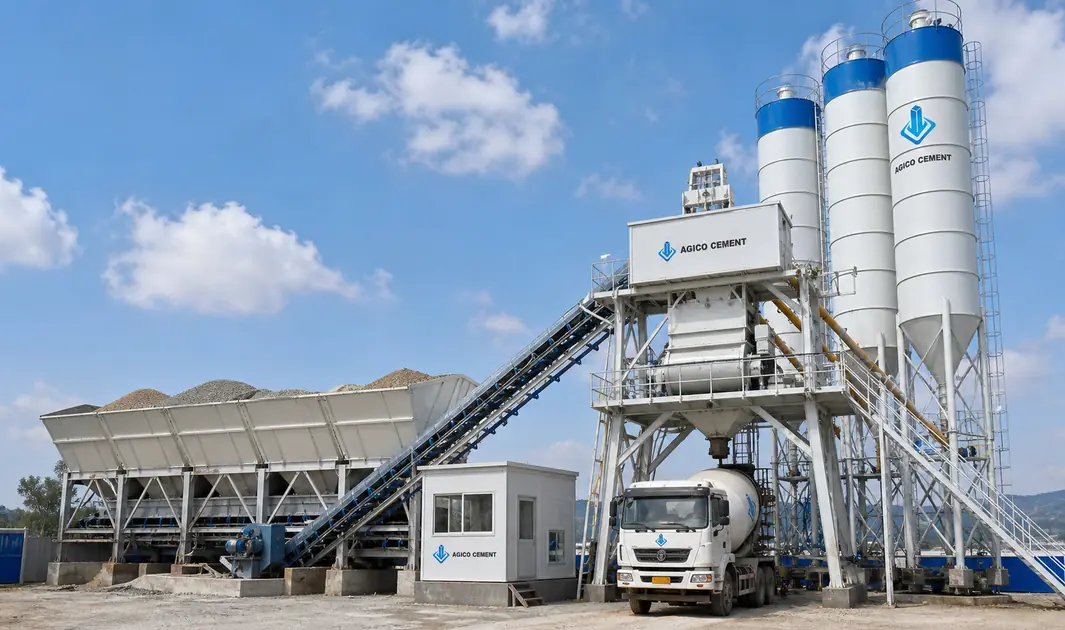
90 m³/h Stationary Plant
Creates a balanced commercial hub with continuous material flow, useful peak reserve and room for planned storage expansion.
Technical Specifications
Capacity and Core Configuration
Theoretical Output
90 m³/h
Concrete Mixer
JS1500
Installed Power
145 kW
Operating Concept
Balanced commercial hub
Selected Configuration
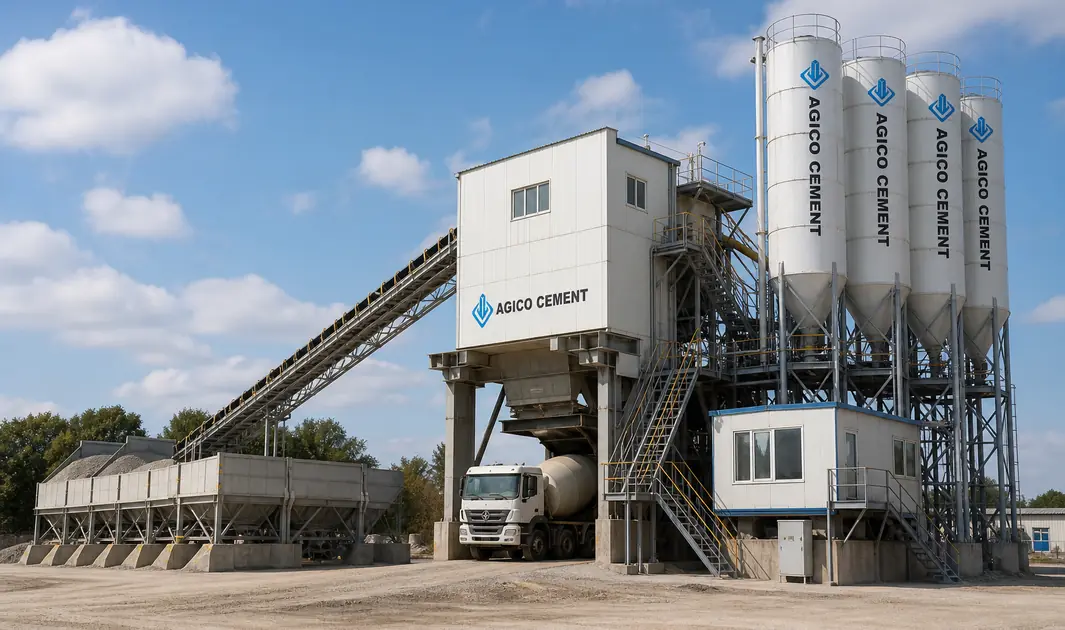
120 m³/h Stationary Plant
Designed for high-volume stationary supply where larger batches, sustained shifts and dependable replenishment determine usable output.
Technical Specifications
Capacity and Core Configuration
Theoretical Output
120 m³/h
Concrete Mixer
JS2000
Installed Power
210 kW
Operating Concept
High-volume supply
Selected Configuration
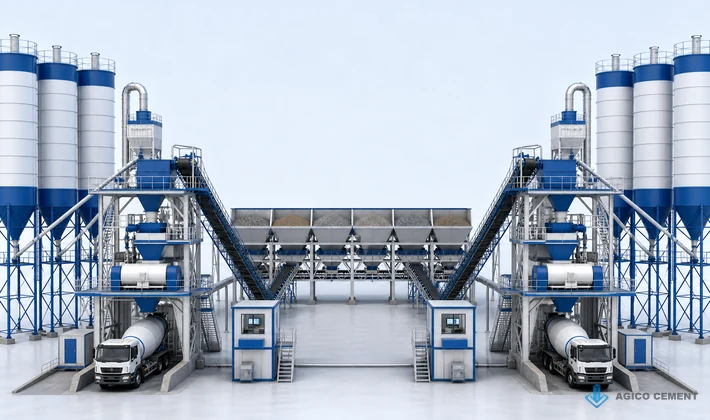
180 m³/h Stationary Plant
Supports intensive infrastructure demand with high-output mixing, expanded storage and the option to evaluate line redundancy.
Technical Specifications
Capacity and Core Configuration
Theoretical Output
180 m³/h
Concrete Mixer
JS3000
Installed Power
260 kW
Operating Concept
Twin-line capable hub
Selected Configuration
240 m³/h Stationary Plant
Engineered for major production corridors where twin-line planning, material autonomy and maintenance continuity reduce dispatch risk.
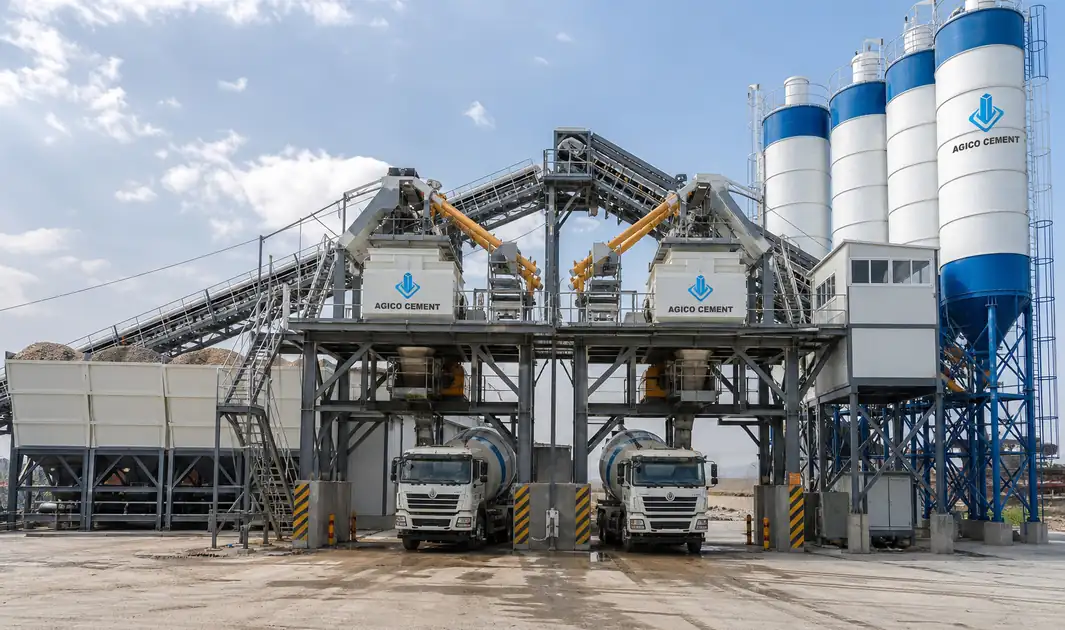
Technical Specifications
Capacity and Core Configuration
Theoretical Output
240 m³/h
Concrete Mixer
JS4000
Installed Power
330 kW
Operating Concept
Major infrastructure hub
Selected Configuration
300 m³/h Stationary Plant
Built around parallel high-output production for strategic supply bases that prioritize dispatch capacity, redundancy and future expansion.
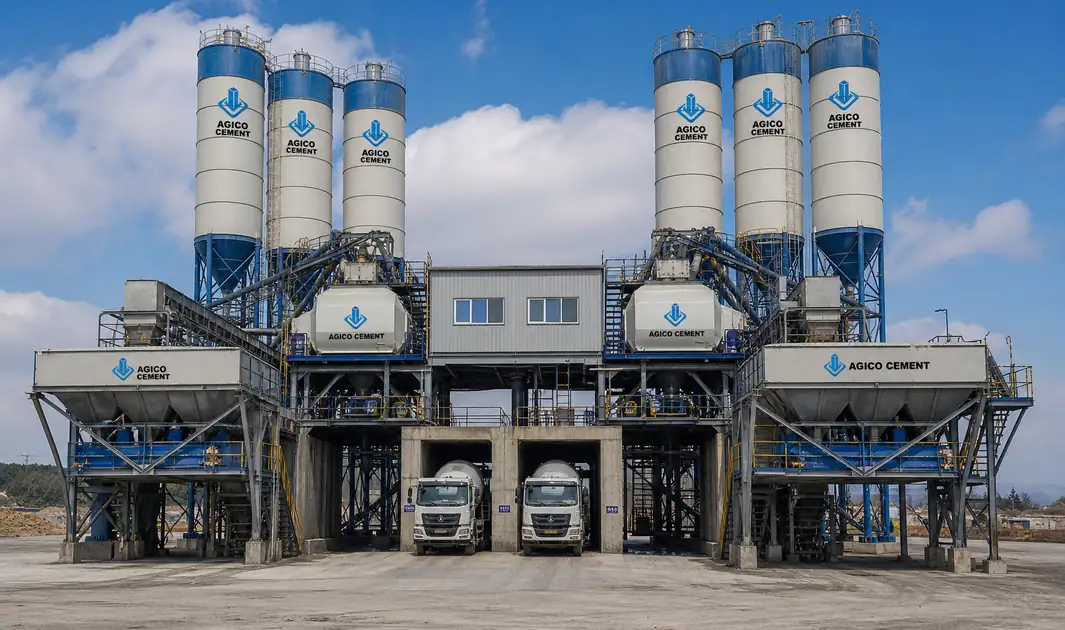
Technical Specifications
Capacity and Core Configuration
Theoretical Output
300 m³/h
Concrete Mixer
JS5000
Installed Power
370 kW
Operating Concept
Maximum-output base
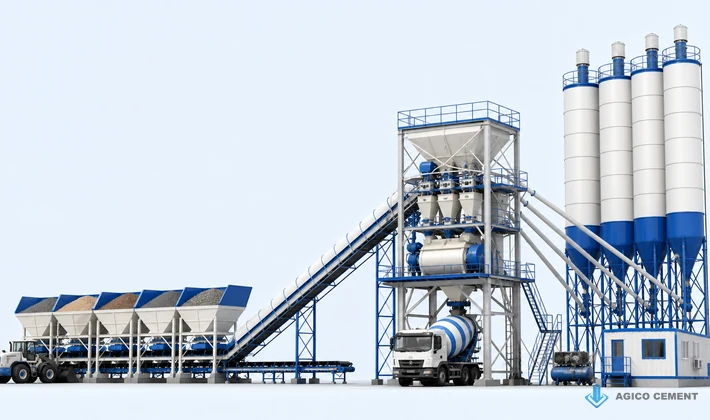
Production Architecture
Single-Line or Twin-Line Stationary Configuration
 01
01Single-Line Configuration
Compact coordination for small and medium output with one primary mixing line.
02Twin-Line Configuration
Parallel production paths for high-capacity demand, maintenance flexibility and redundancy.
Site Layout & Truck Circulation
Design the Production Base as a Material and Vehicle Flow System
Coordinate aggregate delivery, storage, production, mixer-truck loading and maintenance traffic without avoidable crossing points.
01
Separate raw-material delivery from mixer-truck dispatch.
02
Keep queuing clear of production maintenance zones.
03
Reserve access to silos, conveyors and the mixing tower.
Aggregate Receiving
Storage & Feeding
Mixing Tower
Truck Loading
Service Access
MATERIAL FLOW → PRODUCTION → DISPATCH
Foundation, Civil Works & Utilities
Confirm Site Readiness Before Final Equipment Engineering
Geotechnical & Foundation
Bearing conditions, anchors and drainage.
Electrical Power
Voltage, load and backup strategy.
Process Water
Quality, flow, storage and recycling.
Compressed Air
Pressure, dryer and distribution route.
Drainage & Washout
Runoff and truck washout planning.
Access & Logistics
Delivery, crane and erection access.
Storage Autonomy Planner
Size Storage Around Replenishment Risk and Production Continuity
Silo and aggregate-bin capacity should reflect daily consumption, supplier lead time, delivery windows and required reserve.
Daily Material Demand
×
Supply Lead Time
+
Operating Reserve
=
Storage Autonomy
RESULT
Integrated Plant Engineering
Stationary Concrete Batching Plant Components and Systems
Each subsystem is coordinated around material flow, weighing accuracy, mixing efficiency and maintainable operation.
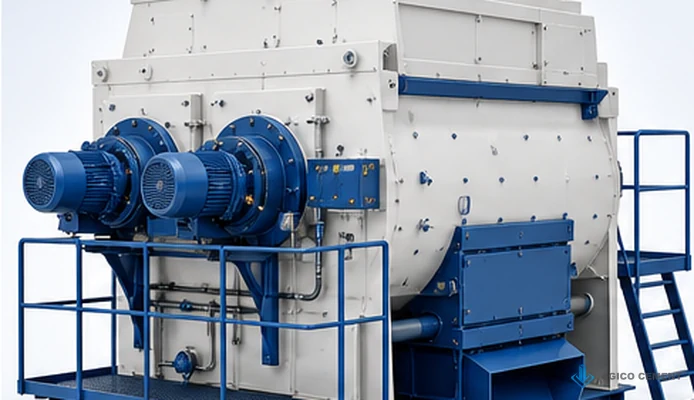
01 / Mixing System
Mixing System
Efficient and durable twin-shaft mixing.
• Forced mixing selected for recipe and aggregate demand
• Replaceable liners and service-access planning
• Charging, mixing and discharge cycles coordinated by PLC
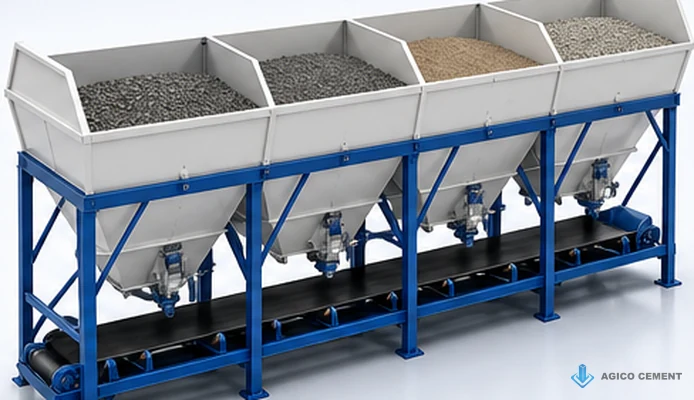
02 / Aggregate Batching
Aggregate Batching
Accurate multi-bin aggregate batching.
• Separate bins preserve aggregate grading
• Controlled gates and weighing improve proportioning
• Bin volume matched to replenishment and shift demand
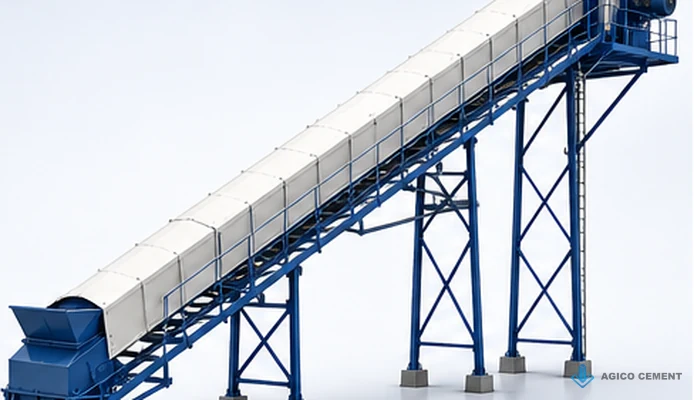
03 / Belt Conveying
Belt Conveying
Coordinated enclosed material transport.
• Continuous transfer reduces material-flow interruption
• Covers and cleaning access support site control
• Belt width and inclination matched to required throughput
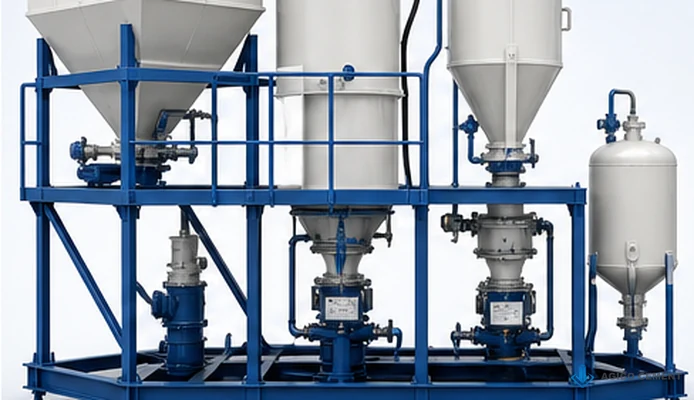
04 / Independent Weighing
Independent Weighing
Separate measurement for each material.
• Dedicated scales for aggregate, powder, water and additives
• Target-versus-actual values recorded for each batch
• Calibration and inspection access designed into the system
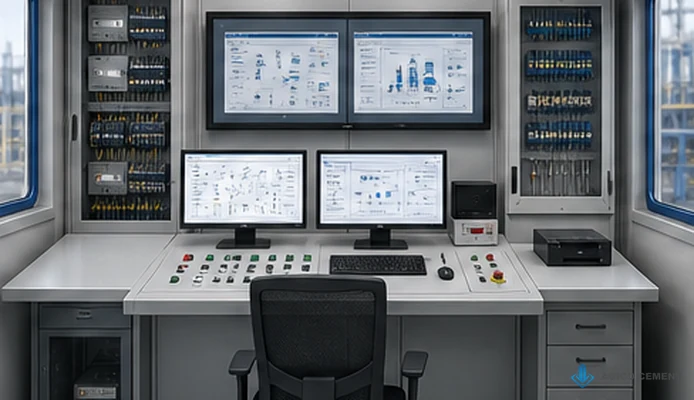
05 / Control System
Control System
PLC recipes, records and diagnostics.
• Recipe permissions, interlocks and alarms in one interface
• Production reports support batch traceability
• Remote diagnostics simplify operating support
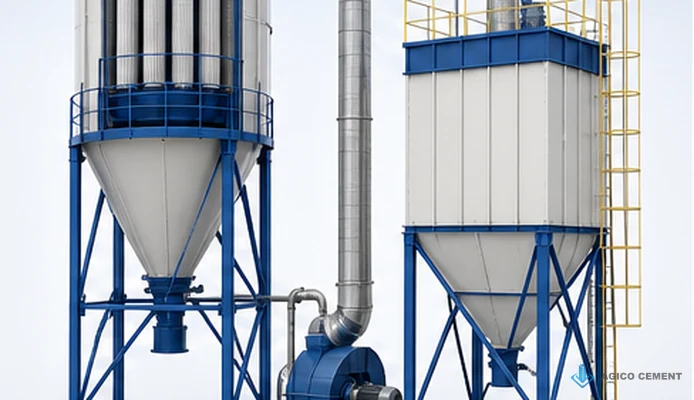
06 / Dust Management
Dust Management
Source-specific collection and enclosure.
• Source-specific filtration at dust generation points
• Enclosures limit dust spread during transfer and charging
• Collection equipment sized to the actual process interfaces
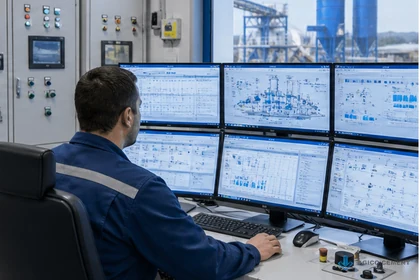
Stable Output & Quality Control
Designed Around Repeatable Daily Production
Rigid structures, coordinated material movement and recipe-based control support consistent routines across long schedules.
Accurate Weighing
Intelligent Control
Environmental Design
Maintenance Access
Long-Term Operation
Uptime, Environmental Control and Expansion Planning
Maintenance Strategy
Daily checks, planned calibration, wear-part replacement and safe service access.
Dust & Noise Compliance
Control silo filling, transfer, mixer charging and truck loading at source.
Expansion-Ready Engineering
Reserve interfaces for silos, bins, a second line and future automation.
Long-Term Production Scenarios
Match the Permanent Base to the Operating Environment
01
Urban Dispatch Base
Prioritize fast truck circulation, recipe-change control and enclosed dust management for dense urban delivery schedules.
02
Highway Production Corridor
Plan high storage autonomy, sustained shift output and dependable material replenishment along long highway construction corridors.
03
Rail & Tunnel Production Camp
Coordinate compact site logistics, cold-weather protection and uninterrupted concrete supply for rail, tunnel and remote camp work.
04
Port & Industrial Complex
Use corrosion-aware equipment protection, robust dust collection and heavy-duty material handling for port and industrial environments.
05
Hydropower Material Base
Match high-volume continuous placement with large aggregate reserves, dependable cooling or heating provisions and remote-site service planning.
06
Precast Production Campus
Configure precise dosing, intensive mixing and automated recipe records for repeatable high-uniformity production across precast product lines.
Supply Boundary Matrix
Clarify Who Supplies, Prepares and Accepts Each Project Scope
Use this matrix as a project discussion framework; final scope is confirmed in the signed proposal.
AGICO Scope
• Core batching, conveying, weighing and mixing equipment
• Plant control system and project documentation
• Equipment interfaces in the technical agreement
Buyer Preparation
• Site data and local design inputs
• Civil works, utilities and access preparation
• Permits and local compliance coordination
Local Procurement
• Concrete and reinforcement for foundations
• Local cabling, piping and installation consumables
• Lifting and site construction resources
Optional Services
• Layout and foundation reference drawings
• Installation guidance and commissioning
• Operator training and spare-parts planning
Total Cost of Ownership Inputs
Evaluate the Permanent Base Beyond the Equipment Purchase
Separate plant scope from civil works, energy, staffing, maintenance, interruption risk and future expansion.
Initial Plant Scope
Mixer, storage and automation
Civil & Site Work
Foundation, roads and drainage
Operating Resources
Power, water and staffing
Maintenance Strategy
Wear parts and shutdowns
Interruption Risk
Supply and utility stability
Expansion Reserve
Future storage and second line
Site Readiness & Risk Register
Resolve Constraints Before They Become Installation Delays
Site Geometry
Turning, queuing and maintenance space
REVIEW BEFORE FINAL ENGINEERING
Material Logistics
Replenishment and delivery windows
REVIEW BEFORE FINAL ENGINEERING
Utilities
Power, water and air conditions
REVIEW BEFORE FINAL ENGINEERING
Ground Conditions
Foundation assumptions and site data
REVIEW BEFORE FINAL ENGINEERING
Climate Exposure
Cold, heat, rain and wind protection
REVIEW BEFORE FINAL ENGINEERING
Scope Interface
Responsibility for civil and local services
REVIEW BEFORE FINAL ENGINEERING
Project Delivery
From Requirement Analysis to Commissioning
Requirement Analysis
Defined inputs, responsibilities and acceptance points.
Engineering Design
Defined inputs, responsibilities and acceptance points.
Manufacturing & Inspection
Defined inputs, responsibilities and acceptance points.
Packing & Delivery
Defined inputs, responsibilities and acceptance points.
Installation & Commissioning
Defined inputs, responsibilities and acceptance points.
Project Evidence
Stationary Concrete Batching Plant Projects
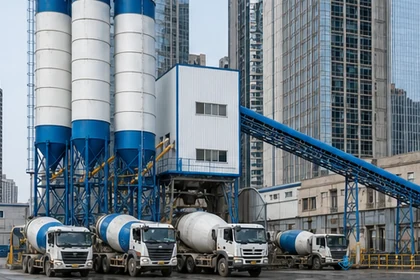
Commercial Concrete Supply
Stable regional dispatch base
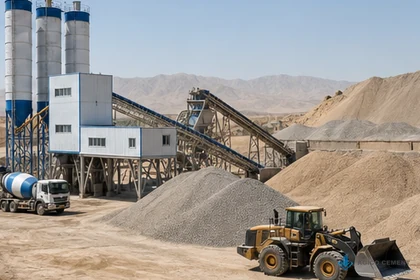
Infrastructure Production Base
High-output project production
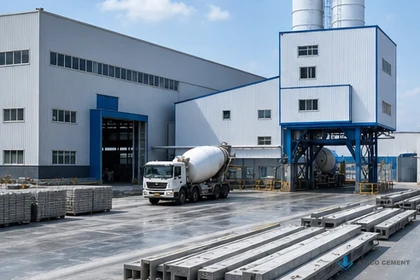
Industrial Construction Plant
Reliable site-based operation
Buyer FAQ
Stationary Concrete Batching Plant FAQ
Start with actual hourly and daily demand, then account for dispatch peaks, maintenance and future expansion.
Twin-line options suit high-capacity projects needing parallel production, flexibility or maintenance redundancy.
Typical inputs include site dimensions, material data, utilities, concrete demand and local requirements.
Capacity, mixer, storage, environmental systems, controls, civil works, logistics and service scope.
Engineering Consultation
Build the Right Stationary Concrete Plant for Your Project
Share your output target, concrete requirements and site conditions to begin a project-specific configuration.