Greenfield Concrete Production Planning
New Concrete Batch Plant for a Purpose-Built Production Base
Define capacity, plant type, storage, automation, site interfaces and delivery responsibility before the new production base is released for manufacture.
✓
New equipment scope
Specify every production interface
✓
Expansion-ready layout
Reserve space and utilities early
✓
Factory preparation
Inspect modules before shipment
✓
Lifecycle planning
Align access, spares and training
Greenfield Decision Basis
Define the New Plant Around the Business Plan
1
Demand Profile
Separate average output from peak dispatch or placement windows.
2
Product Portfolio
List concrete grades, consistencies and specialty recipes.
3
Material Supply
Confirm aggregate, powder, admixture and water logistics.
4
Site & Fleet
Map access, truck movement, utilities and future expansion.
5
Operating Model
Define shifts, staffing, maintenance and record requirements.
6
Delivery Target
Coordinate civil readiness, shipment and commissioning timing.
New-vs-Used Procurement Risk Review
Compare Acquisition Price With Integration and Lifecycle Risk
01
Configuration Fit
NEW PLANT
New: engineered around current demand and interfaces.
USED EQUIPMENT CHECK
Used: verify whether inherited capacity and layout fit the project.
02
Equipment Condition
NEW PLANT
New: documented supply and inspection scope.
USED EQUIPMENT CHECK
Used: inspect wear, corrosion, controls and missing components.
03
Controls & Records
NEW PLANT
New: define current recipes, permissions and reporting.
USED EQUIPMENT CHECK
Used: confirm software, electrical standards and support availability.
04
Installation Scope
NEW PLANT
New: coordinate foundations and interfaces before shipment.
USED EQUIPMENT CHECK
Used: allow for dismantling, transport, refurbishment and reassembly.
05
Expansion Path
NEW PLANT
New: reserve planned tie-ins and utility capacity.
USED EQUIPMENT CHECK
Used: inherited geometry may restrict future modification.
06
Commercial Comparison
NEW PLANT
Compare like-for-like equipment, service and responsibility boundaries.
USED EQUIPMENT CHECK
Include survey, repair, downtime and compatibility exposure.
New Plant Type Selector
Choose the Production Architecture Before Selecting a Model
Start with the business and delivery model, then confirm capacity and equipment. A model number alone cannot define the complete production system.
Business Model
Commercial Ready-Mix
Serve multiple customers, recipes and dispatch windows.
Engineering Priority
Configuration Focus
Prioritize usable output, storage autonomy, truck circulation and production records.
Business Model
Project / On-Site
Supply one major project close to the placement point.
Engineering Priority
Configuration Focus
Prioritize deployment, site access, temporary utilities and schedule-linked production.
Business Model
Precast Production
Feed moulding or casting cells with repeatable recipes.
Engineering Priority
Configuration Focus
Prioritize mixer action, micro-dosing, moisture correction and cell interfaces.
Business Model
Mobile / Relocatable
Move production between contracts or work fronts.
Engineering Priority
Configuration Focus
Prioritize transport envelope, setup sequence, foundations and reconnection time.
20+ Configurations, Eight Core Families
Select a New Concrete Plant Type Around the Operating Model
Each family solves a different commercial and site problem. AGICO can then configure capacity, storage, mixer, automation and environmental systems within the chosen architecture.

New Ready-Mix Plant
Commercial dispatch, recipe flexibility and fleet circulation.
Best for multi-customer concrete sales.
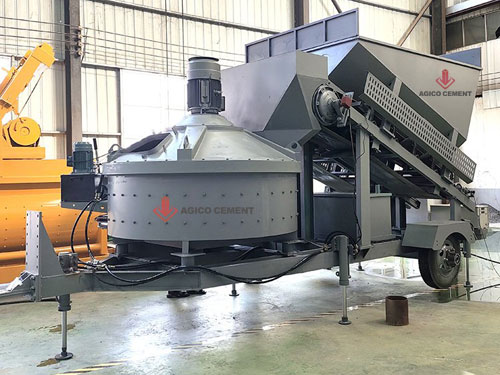
New Mobile Plant
Relocatable production for phased projects and changing work fronts.
Best for contracts that require relocation.

New Stationary Plant
Permanent production base with scalable storage and automation.
Best for long-term regional supply.

New Precast Plant
Fast, repeatable mixing for moulding and casting cells.
Best for controlled factory production.
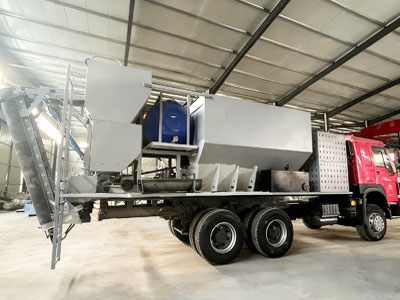
New Volumetric Plant
On-demand material proportioning for flexible service work.
Best for variable small-batch demand.

New Compact Plant
Reduced footprint and simplified site interfaces.
Best for restricted industrial sites.

New Dry Batch Plant
Truck-mixed production where process and market conditions fit.
Best where truck mixing is commercially suitable.

New Modular Plant
Sectional delivery and planned future relocation or expansion.
Best for staged investment and expansion.
New Plant Configuration Path
Freeze the Production Basis in Six Engineering Decisions
✓
01 Capacity & Cycle
Model peak demand, batch size, cycle and truck or cell exchange.
✓
02 Mixer & Line Count
Match mixer action and single- or double-line architecture to products and uptime.
✓
03 Material Autonomy
Size aggregate bins, powder silos and admixture storage around replenishment.
✓
04 Weighing & Controls
Define scales, tolerances, recipe permissions, records and interfaces.
✓
05 Layout & Utilities
Coordinate foundations, power, water, air, access and environmental controls.
✓
06 Delivery Boundary
Separate AGICO supply, local works, optional services and acceptance points.
Original Technical Parameters
New Stationary Concrete Batching Plant Capacity Table
The original 25–300m³/h data is retained below. Use it as an engineering starting point; final usable output and equipment scope depend on recipe, cycle, storage, site and operating assumptions.
New Mobile Concrete Batching Plant Reference Models
Core Production Systems
Specify New Equipment as One Coordinated Plant


1
Twin-Shaft / Planetary Mixer
Select mixing action around concrete grades, batch size and discharge rhythm; service doors and wear-part access support planned maintenance.
2
Aggregate Bins & Feeders
Match compartment count, feeder type and live capacity to aggregate grading and replenishment logistics.
3
Belt or Skip Charging
Choose the transfer route around output, footprint, weather protection and maintenance access.
4
Powder Storage & Screws
Coordinate silo autonomy, screw angle, venting, level control and tanker access.
5
Independent Weighing
Separate aggregate, cement, water and admixture measurement to support recipe repeatability and calibration.
6
PLC Automation
Control recipes, permissions, alarms, moisture correction, batch records and production reports.
7
Dust and Water Control
Integrate filters, sealed chutes, wash-down collection and housekeeping routes with the plant layout.
8
Service Platforms & Safety
Provide practical inspection routes, guarding, isolation and component-replacement clearance.

AGICO New Plant Supply Capability
Connect Engineering, Manufacturing and Startup in One Supply Scope
AGICO coordinates the equipment package around approved project inputs, then prepares identifiable plant modules for shipment and commissioning support.
✓
Engineering Inputs
Layout, utilities, process flow and interface review.
✓
Manufacturing
Fabrication and component preparation against the approved scope.
✓
Inspection & Packing
Checks, identification and shipment sequencing.
✓
Commissioning Support
Calibration, dry runs, loaded trials and operator handover.
Projects and Factory Evidence
See New Concrete Plant Equipment Beyond the Sales Specification
Project references and workshop details help buyers evaluate capacity fit, manufacturing preparation, shipment scope and site execution.

Portland New Concrete Plant
Commercial production reference configured around local demand.

90m³/h Plant for Mongolia
Medium-output overseas plant with project-specific site interfaces.

120m³/h Plant for Colombia
High-output plant for a growing regional concrete market.

60m³/h Project Plant
Project configuration balancing output, footprint and utilities.

60m³/h New Plant Shipment
Shipment evidence for coordinated modules and components.

25m³/h Infrastructure Plant
Compact capacity for infrastructure or localized supply.

Water and Admixture Hopper
Factory-prepared liquid dosing component for accurate batching.

Prepared Small Parts Area
Organized component preparation supports installation sequencing.
Project Delivery Control
Move the New Plant From Design Basis to Production Handover
1
Demand Review
Confirm commercial demand, recipes and operating assumptions.
2
Configuration Approval
Freeze equipment, interfaces and responsibility boundaries.
3
Site Readiness
Coordinate civil works, access, utilities and storage.
4
Manufacturing Release
Track equipment preparation and agreed inspection points.
5
Delivery & Installation
Sequence shipment, erection, wiring and calibration.
6
Startup & Handover
Run defined checks, training and outstanding-action records.
Commercial Scope
Request an Itemized New Concrete Plant Proposal
A useful proposal needs confirmed inputs rather than a headline model price.
1
Target Output
Average, peak, daily volume and shifts.
2
Concrete Products
Grades, consistency, specialty recipes and batch size.
3
Materials
Aggregate grading, powders, admixtures and supply method.
4
Site Data
Boundary, levels, access, climate and utilities.
5
Plant Type
Stationary, mobile, commercial, project or precast use.
6
Destination & Timing
Country, delivery access and commissioning target.
Buyer FAQ
New Concrete Batch Plant Procurement Questions
Use average and peak demand, recipe-specific cycle assumptions, batch size, truck or production-cell exchange, operating shifts and material replenishment.
Review simultaneous demand, acceptable shutdown exposure, recipe separation, maintenance strategy, footprint and shared-system capacity.
Provide a site survey, access route, truck plan, utilities, geotechnical basis, environmental constraints and expansion envelope.
Project-specific storage, conveying, weighing, mixing, controls and environmental systems can be evaluated after the design inputs and responsibility boundary are confirmed.
Civil works, local installation resources, permits, utilities and optional services depend on the agreed responsibility matrix and must be stated explicitly.
Coordinate site readiness, erection checks, calibration, dry runs, loaded trials, operator training and recorded acceptance actions.
Build the New Concrete Plant Around Verified Project Inputs
Share demand, products, materials, site conditions and delivery priorities for a coordinated proposal.