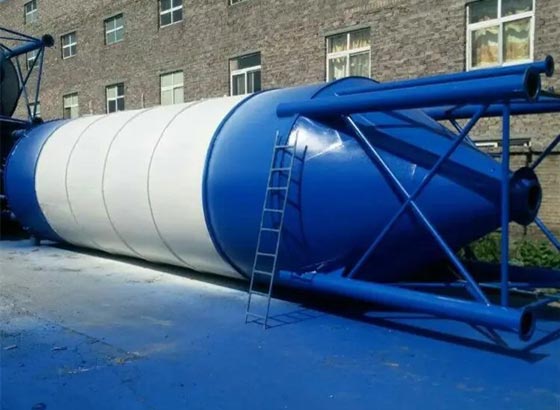
Storage Capacity: 30t-500t (able to customize)
Material : High-strength steel, Q235 steel plate, Q345 steel plate, Galvanized steel plate, Weathering steel (such as Corten steel), Stainless steel plate (special purpose)
Advantages of concrete silo for sale
- Thickened plate: Selected thickened plate, the tank body is made of steel plate with reinforcement rings, which is strong and durable
- Can be used for a variety of materials: Suitable for bulk concrete and dry fly ash
- Small footprint: Vertical concrete silo is generally cylindrical structure, each part has better pressure resistance
Why choose concrete silo from AGICO Cement
Short construction period and low cost
Silo adopts on-site construction, which makes the installation very fast and greatly shortens the construction period. Since the structure is made entirely of thin steel plates, the overall weight is significantly reduced, greatly reducing construction costs.
Small footprint and lightweight
The height and diameter of the silo can be freely selected within a large range, and the spacing is small, which effectively improves space utilization. The weight of the silo itself is only 1/6 of that of a concrete silo of the same volume, but the weight of the steel bars is the same as that of a concrete silo, which greatly reduces the load and construction cost of the foundation structure.
High strength
Silo uses continuous spiral biting technology, and the thickness of its connection parts is five times that of the raw material, which greatly enhances the load-bearing capacity and structural strength. Perfect for all kinds of concrete batch plants.
Excellent airtightness and wide application
Bending and biting are performed by special silo rolling equipment to ensure the craftsmanship quality of each part of the silo body and excellent sealing performance. Silo can store all kinds of ultra-fine powder materials, and has moisture-proof and anti-penetration functions, and has a wide range of applications.
Superior overall performance and long service life
The silo produced by our company is manufactured using special equipment. The outer wall is designed with spiral ribs with a width of 30 to 40 mm, which is five times the thickness of the raw material. This structure significantly improves the silo’s load-bearing capacity, ensuring it has excellent overall performance and a longer service life.
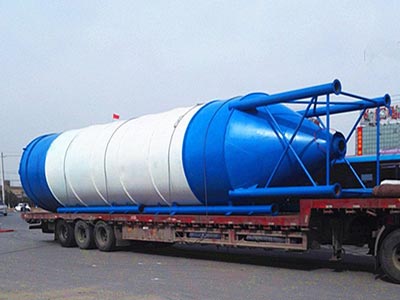
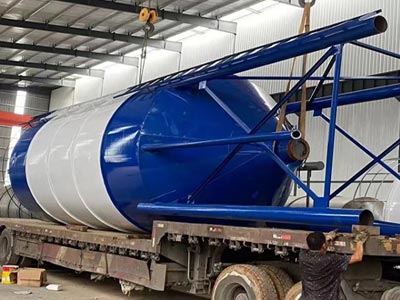
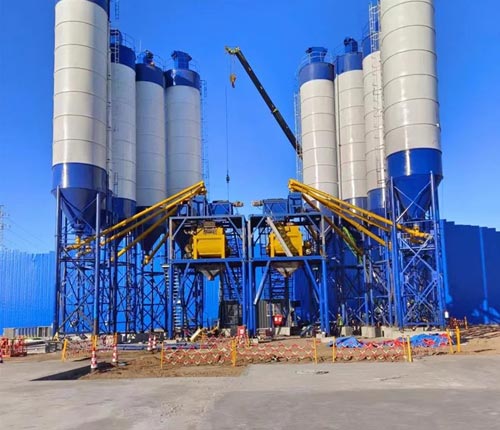
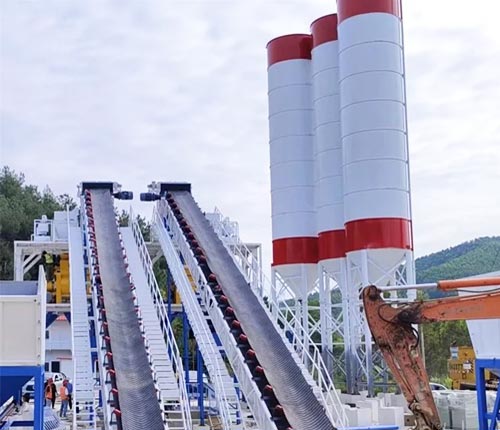
Our successful cases

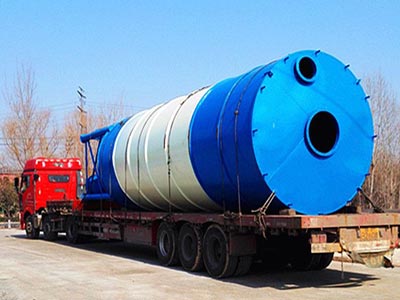
Parameters of AGICO’s concrete silo
| Model | Silo diameter | Silo height | Total Height | Concrete mixer | Screw conveyor |
| 30T | 2.5m | 4.8m | 11.4m | JDC 350 | LSY 163 |
| 50T | 3m | 5.4m | 12m | JS 500L | LSY 180 |
| 80T | 3m | 9m | 15.6m | JS 750L | LSY 230 |
| 100T | 3m | 11.4m | 18m | JS 1000L | LSY 230 |
| 150T | 72 | 23.5m | 29m | JS 1000L | LSY 230 |
| 200T | 4.5m | 18.6m | 25.2m | JS 1500L | LSY 230 |
| 300T | 4.5m | 24.6m | 29.5m | JS 2000L | LSY 230 |
| 500T | 6m | 22.2m | 28.8m | JS 3000L | LSY 230 |
Details of concrete silo for sale
| Component | Function | Picture |
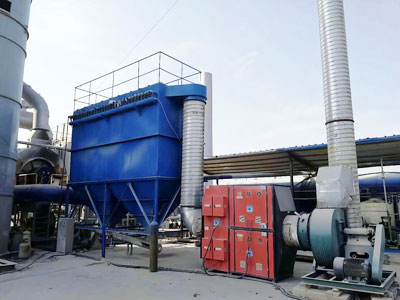
| Dust Collector | The dust collector installed on the top of the silo prevents any dust emissions. During the pneumatic conveying of bulk solids into the silo, both air and dust are present. The collector is used to vent the air and filter out the dust. Materials such as concrete, ash, food, plastics, and minerals are typically loaded into the silo via a pneumatic conveying system from bulk trucks. The silo filter ensures proper silo ventilation without releasing dust, maintaining a clean environment. |  |
| Silo Level Switch/Sensor | A silo level switch (also called a silo level sensor) monitors the level of bulk materials inside the silo. The rotating paddle of the sensor is inserted into the silo. When the material surrounds the paddle, it stops rotating and sends a signal indicating that the material level has exceeded the position of the sensor. |  |
| Pressure Relief Valve | The silo pressure relief valve is a critical safety device designed to prevent excessive pressure buildup inside the silo. During pneumatic conveying, there is a risk of pressure increase within the silo. When the pressure exceeds a pre-determined threshold, the pressure relief valve automatically vents the excess air, maintaining a low-pressure environment and ensuring operational safety. |  |
| Pressure Sensor | A silo pressure sensor measures the air pressure inside the silo and sends real-time data to the silo control system or automation system, providing precise pressure level monitoring to ensure safe operation. |  |
| Aeration Pad/Air Injector | To fluidize bulk solids within the silo, aeration pads or air injectors can be utilized. Fluidized materials flow more easily, resulting in improved discharge efficiency. These devices are typically installed near the discharge flange of the silo. Pressurized air is applied through the air injectors to enhance the material flow, ensuring smooth unloading. | 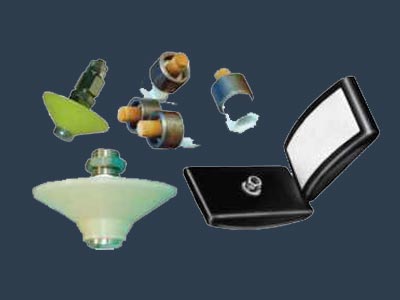 |
| Discharge Butterfly Valve | A butterfly valve is used to control the discharge of bulk solids from the silo. It is a simple and reliable device to regulate material flow. |  |
| Screw Conveyor | Screw conveyors are widely used below silos to control the flow of bulk solids. They provide continuous and uniform material discharge, suitable for various types of bulk solids. | 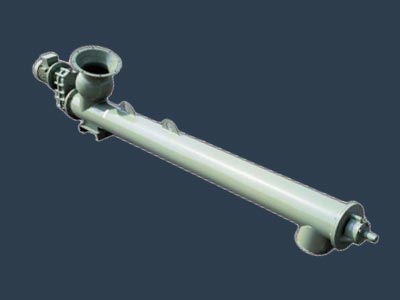 |
| Rotary Valve | A rotary valve, located beneath the silo, regulates the discharge of bulk solids such as powders or granules. It ensures a consistent and controlled flow to downstream equipment such as conveyors, screw feeders, or mixers. |  |
| Silo Control System | The silo control system manages the entire process of loading bulk materials into the silo using a pneumatic conveying system. It monitors the product level and internal pressure within the silo, while controlling the jet filter, inlet valves, and discharge valves. This ensures safe and reliable operation. | 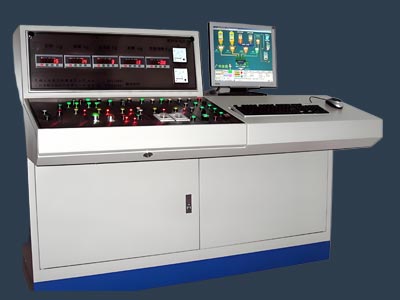 |
| Pinch Valve | A pinch valve is used to control the flow of bulk solids within pneumatic conveying pipelines. When activated, the flexible sleeve inside the valve is compressed by applied air pressure, tightly closing the pipeline. When the valve opens, there are no internal components or obstructions to slow down or block material flow, ensuring smooth operation. | 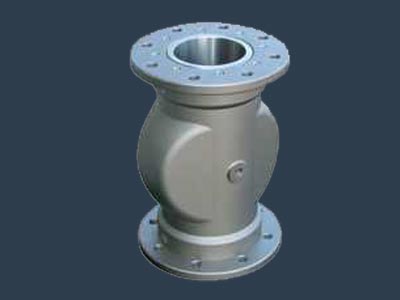 |
What is concrete silo
Concrete silo is usually used as a supporting product for concrete mixing plants (buildings). Concrete silo is suitable for loading bulk concrete and dry fly ash. It is rainproof, moisture-proof and easy to use. It is generally available in 30t, 50t, 100t, 200t, 300t, 400t, 500t (able to be customized) and other specifications, and can also be made according to the size required by the user.
Concrete silo is generally a cylindrical support structure, with dust removal equipment on the upper part to prevent dust leakage, and an arch-breaking device on the lower part to prevent dust agglomeration and make the powder unloading smooth. Concrete silo generally uses a bulk concrete conveyor to blow the powder into the silo. Concrete silo is a cylindrical structure, with four round tube legs at the bottom to support the entire silo body. The entire silo is a steel structure and is welded; a dust collector and a pressure safety valve are installed on the top. It is generally a cylindrical support structure with dust removal equipment on the upper part to prevent dust leakage, an arch-breaking device on the lower part to prevent powder from agglomerating and ensure smooth powder discharge, and a material level sensor to keep track of the material usage in the silo at any time.
Concrete plant silo configuration
Concrete plant silo is a closed tank used to store bulk materials. It can store concrete, fly ash and other materials. The concrete silo tank is equipped with a material level system to display the material position and quantity. It can be used with a screw conveyor pump to transport materials to various locations. The transportation and installation of concrete silo are very convenient, and their performance is stable and reliable. It is an ideal configuration for each mixing station.
Concrete silo consists of a silo steel structure, ladder, guardrail, feeding pipe, dust collector, pressure safety valve, high and low-level gauge, unloading valve, etc. The description of its dust removal system, arch-breaking device, and material-level device are as follows:

Dust removal system
Concrete silo is equipped with an electric dust removal device on the top, which can effectively absorb suspended particles in the silo and reduce pollution to the surrounding environment.
Arch breaking device
The lower cone of the concrete silo|concrete silo is equipped with an air blowing arch breaking device, which uses a small electromagnetic reversing valve in the air control box to control the release of compressed air to break the arch of concrete and various powders to avoid powder accumulation and blockage.
Material level device
The concrete silo material level device can sense the storage height of the material in the silo.
what are silos used for
Silo is a closed tank for storing bulk materials. It is suitable for storing various bulk materials such as grain, concrete, fly ash, etc. The tank is equipped with a material level system to display the location and amount of the material. The hole-breaking device can remove the solidity caused by the material being deposited for too long. The silo and the screw conveying pump can be used together to transport the material to various locations. The tank is easy to install, safe and reliable. It is an ideal bulk concrete silo storage tank for various mixing stations. It is suitable for storing bulk concrete and dry fly ash. It has the characteristics of rainproof, moisture-proof and easy to use. The specifications and dimensions can also be made according to the customer’s requirements.

Types of silos & Concrete silo cost
Vertical Concrete Silo
Features: Suitable for fixed installation, small footprint, large capacity.
Capacity range: 30 tons to 500 tons
Advantages: Strong sealing, durable, suitable for long-term projects.
Cost:
Small (30 to 50 tons): $2,000 to $5,000
Medium (50 to 150 tons): $5,000 to $15,000
Large (150 to 500 tons): $15,000 to $50,000
Application scenarios: Fixed mixing plants, commercial mixing companies, etc.
Horizontal Concrete Silo
Features: Horizontal design, no foundation required, easy to transport and install.
Capacity range: 20 tons to 150 tons
Advantages: Flexible and mobile, suitable for temporary projects.
Cost:
Small (20-50 tons): $3,000-$8,000
Medium (50-150 tons): $8,000-$20,000
Application scenarios: road construction, short-term construction projects.
Mobile Cement Silo
Features: Designed specifically for mobile mixing plants, usually integrated structures.
Capacity range: 10 tons to 100 tons
Advantages: Quick installation and easy movement.
Cost: $5,000-$15,000
Application scenarios: mobile concrete mixing plants, highway or bridge construction.
Bolted Cement Silo
Features: Assembled from multiple components, suitable for long-distance transportation or export projects.
Capacity range: 50 tons to 1000 tons
Advantages: Economical transportation and flexible assembly.
Cost:
Small and medium (50-150 tons): $10,000-$25,000
Large (150-1000 tons): $25,000-$80,000
Application scenarios: large mixing plants, international engineering projects.
Causes and solutions for concrete silo blockage
I. Causes of blockage
- Accumulated lumps: A large amount of concrete lumps are accumulated in the concrete silo, causing the concrete to be unable to flow.
- Discharge port is blocked: The discharge port at the bottom of the concrete silo is blocked, causing the concrete to be unable to flow out smoothly.
- Abnormal mixing drum: The abnormal mixing drum causes the concrete to be unable to be mixed evenly, thus affecting the fluidity of the concrete.
II. Solutions
For different causes, the solutions are also different:
- Clean the inside of the concrete silo: By cleaning the inside of the concrete silo and removing the accumulated lumps, the fluidity of the concrete can be restored.
- Check the discharge port: Check whether the lower discharge port is blocked. If it is blocked, it can be solved by cleaning or unblocking.
- Maintain the mixing drum: Regularly maintain the mixing drum and ensure that the mixing drum operates normally during work, which can effectively improve the fluidity of concrete.
In short, if the concrete silo does not discharge concrete, it can be solved by cleaning the inside of the concrete silo, checking the discharge port or maintaining the mixing drum. The correct solution can improve the fluidity of concrete, ensure the construction progress, and thus complete the project smoothly.