Maintenance for Concrete Batch Mixing Plant
Maintenance and Inspection of the Control Room
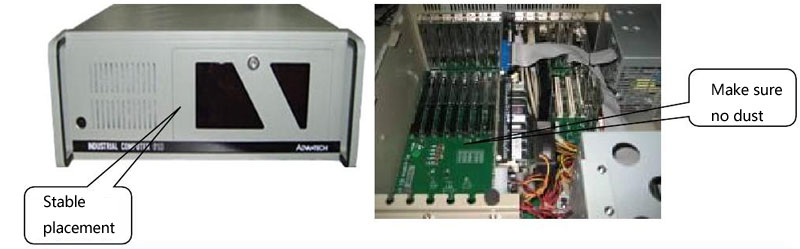
The control room is the core of the batching plant, analogous to the human brain. It contains electrical components such as industrial computers and PLCs, which are sensitive to water, dust, and vibration. Key inspection points:
Environment and Equipment Placement: The interior should be clean and tidy, and the industrial computer should be placed stably.
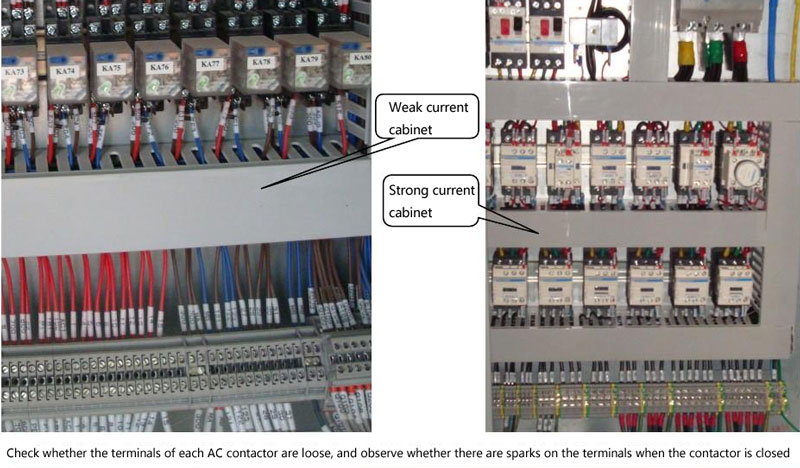
Electrical Connections: The air switches and terminals of the AC contactors in the power cabinet should be tight. Check if the terminals of the AC contactors are loose and if there are sparks when they are engaged.
Maintenance and Inspection of the Mixing Machine
The mixing machine is crucial for mixing ready-mix concrete, and its maintenance affects the service life of the equipment. Key inspection points:
(1) Lubrication System
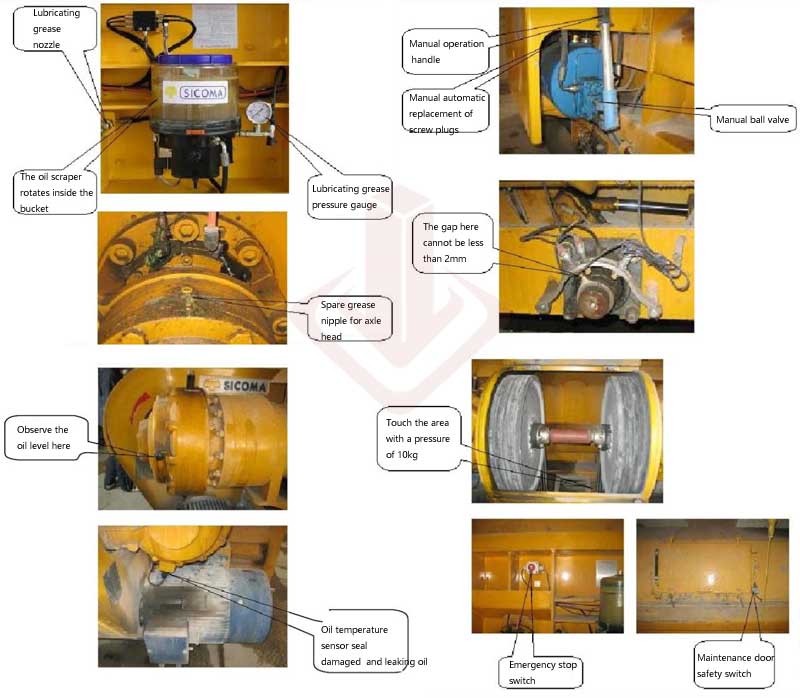
During operation, observe the operation of the grease pump scraper and the pressure of the pressure gauge (normal 10 – 60 bar. If it is lower than 10 bar, there may be a problem with the pump core; if it is higher than 60 bar, there may be a blockage in the valve or pipeline). Press the spare grease nipple on the shaft end; if grease overflows, the shaft end is lubricated properly.
(2) Discharge Door and Reduction Gearbox
During automatic production, the manual handle of the discharge door should be retracted, the ball valve should be in the neutral position, and the manual-automatic conversion plug should be tightened. The gap between the detection switch of the discharge door and the induction cone should be adjusted to about 2 mm, and the protective cover should not be removed.
The reduction gearbox should be refueled and replaced regularly. When stopped, the oil level should be above the red line of the oil indicator (use Mobil 629# or Shell 150# gear oil, 16 liters). Check if it operates smoothly and if there is any abnormal noise, and check if there is oil leakage at the input and output shaft seals and the oil temperature sensor.
(3) Belts and Safety Switches
The V-belt should have no turned edges, cracks, and should be tensioned without slack. When a force of 10 kg is applied to the middle, the deformation should not exceed 20 mm.
The emergency stop switch and the inspection door safety switch should function normally (when the emergency stop is pressed or the inspection door is opened, the main machine cannot start).
(4) Mixing Components
The mixing shaft and blades should be cleaned every working cycle to prevent material buildup and shaft seizure.
The gap between the blades and the liner should be maintained at 3 – 8 mm, and the blades should be rotated to the highest position of the liner for adjustment.
Maintenance and Inspection of Belt Conveyors
Responsible for conveying sand and gravel materials. Poor maintenance can cause premature wear of belts and idlers. Key inspection points:
(1) Reducer
Operate smoothly with moderate noise, and the housing (especially the input and output shafts) should be free of dust. There should be no oil leakage at the shaft seal, and the gear oil level should be above the red line of the oil indicator (use medium-load extreme pressure industrial gear oil). The drive motor housing should be free of dust, and the V-belt should have no slack, turned edges, or cracks.
(2) Drums, Idlers, and Belts
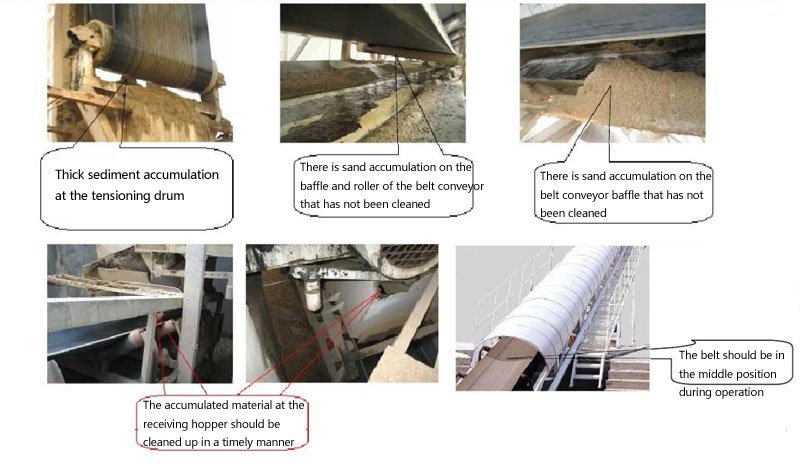
The drums and idlers should be free of sand accumulation. The receiving hopper at the end of the inclined belt should be cleaned in a timely manner to prevent sand from entering between the tail drum and the belt. The belt should not deviate during operation. The chain of the flat belt reducer should be greased in a timely manner, and grease should be visible on the surface.
Maintenance and Inspection of the Metering System
The metering accuracy affects the properties of concrete, and maintenance is crucial. Key inspection points:
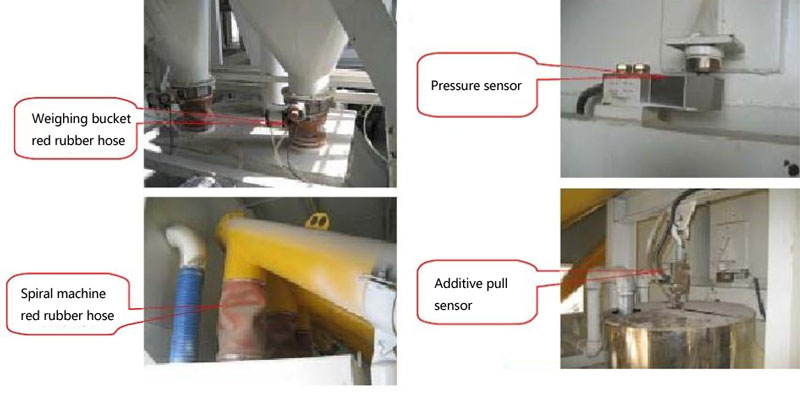
Sensors: The load cells of the weighing hopper should be uniformly stressed (the compression type bears positive pressure, and the tension type bears positive tension). There should be no foreign objects in the force-taking rod groove of the compression sensor, and the tension sensor for admixtures should not be contaminated with admixtures. The sensors of the same scale should be of the same model and specification.
Soft Connections: The red hoses for the soft connections of the weighing hopper and the screw conveyor should not be under force in the natural state.
Hopper: The aggregate hopper should be cleaned of accumulated material in a timely manner to prevent the valve from not closing properly and affecting production.
Maintenance and Inspection of Feeding Systems
Ensure the conveying and storage of powder materials. Key inspection points:
(1) Screw Conveyor and Butterfly Valve
The gear oil level of the reducer should be above the red line of the oil indicator, and there should be no noise or abnormal sound during operation. For unused powder silos, the manual butterfly valve at the discharge port should be closed, and the intermediate suspension shaft of the TU series screw conveyor should be greased daily.
(2) Arch Breaking and Dust Collection
The arch-breaking air cushion should be free of blockage. Use a tool to press the manual override button of the corresponding arch-breaking solenoid valve; if a blowing sound is heard at the air cushion, it indicates that the air cushion is not blocked. The roof dust collector should be vibrated for 2 – 3 minutes before and after each ash delivery to shake off the dust on the filter element and prevent blockage. The filter element and pressure safety valve should be cleaned every half month.
(3) Level Gauge
Detects the material level in the powder silo. If the blades of the level gauge are blocked by cement blocks,it may cause false signals. If the material level indication on the software monitoring screen does not match the actual situation, the level gauge should be cleaned.
(4) Feeding System (Bin Selection and Material Distribution)
During linked bin selection, press the button of the corresponding bin with insufficient material, the bin selection motor starts, and the distributing belt on the upper floor rotates to the corresponding bin to store materials separately. Key maintenance points:
Equipment and Safety: The belt conveyor should be maintained as described above. Check the rotating track and the high-level gauge (regularly check the functionality to prevent overflow). When feeding in linkage, personnel should leave the rotating radius of the distributing belt after hearing the alarm.